Cessna Grand Caravan EX Charter: Miami to New York
Published · Updated
Let's be straight about this one: the Grand Caravan EX is the slowest and least expensive way we arrange to fly private between Miami and New York, and it earns its place by doing what nothing else at the price can — carrying nine to ten passengers and a small mountain of luggage. Textron Aviation (Cessna) built it as a working utility aircraft, and on this run it works hardest for big groups on lean budgets.
Honesty matters here. With a 912-nautical-mile range against a 1,000-nm route, the Caravan cannot make New York without a fuel stop — plan on about five and a half hours of flying plus a forty-minute break, somewhere like coastal Carolina. Estimated pricing runs $5,500 to $8,000 one-way from Miami-Opa Locka Executive Airport (OPF), which per seat undercuts every jet making the same trip by a wide margin.
- 912 nm range
- 185 ktas cruise
- 9–10 passengers
Estimated pricing for planning — your account manager confirms the final quote.
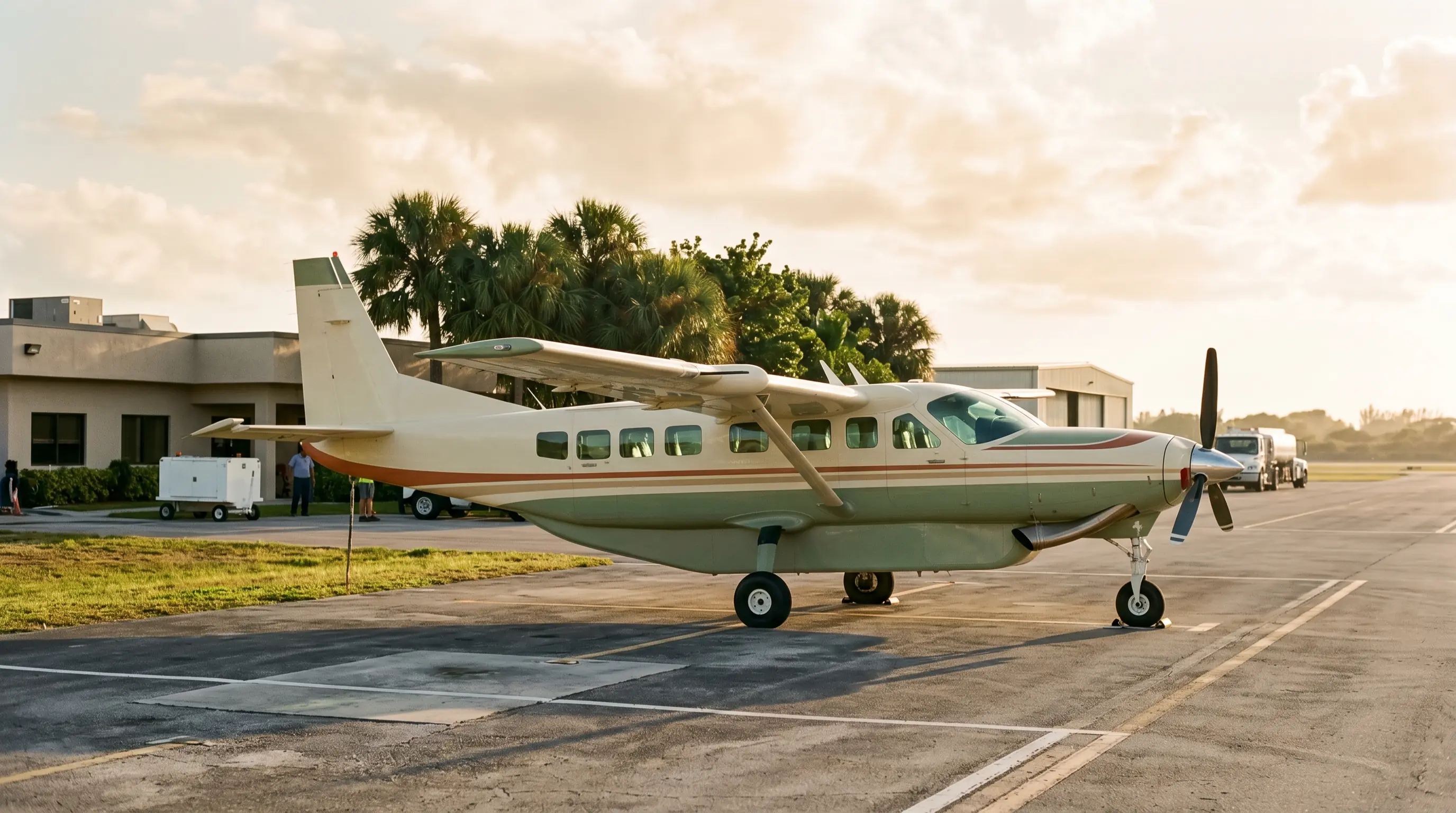
Private charters between Miami and New York typically depart from Miami-Opa Locka Executive Airport (OPF), Fort Lauderdale Executive Airport (FXE), Fort Lauderdale-Hollywood International Airport (FLL), or Miami International Airport (MIA) and arrive at Teterboro Airport (TEB), Westchester County Airport (HPN), Republic Airport (FRG), or Long Island MacArthur Airport (ISP).
Grand Caravan EX specifications
Manufacturer performance figures — Textron Aviation (Cessna).
- 912 nm
- Max range
- 185 ktas
- Cruise speed
- 9–10
- Passengers
- 4 ft 5 in
- Cabin height
- 111 cu ft
- Luggage
- 25,000 ft
- Service ceiling
What the Grand Caravan EX is actually for
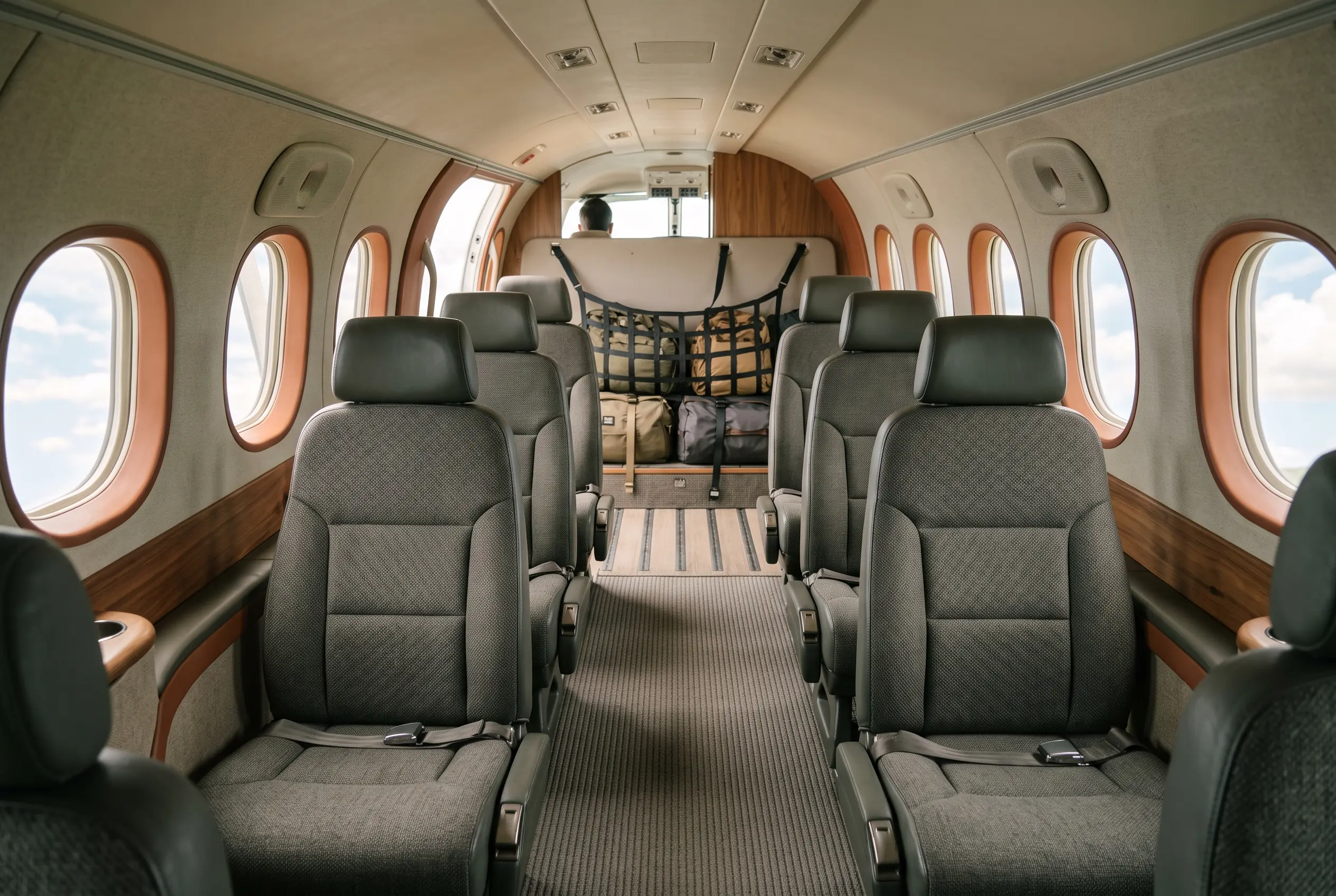
The honest use case is volume. The cabin seats nine or ten in commuter comfort, the aft hold and belly cargo pod swallow 111 cu ft of luggage, and the flat floor takes cases that would never fit a light jet's wardrobe locker. Sports gear, camera builds, trade-show kit, a family's entire relocation — the Caravan carries what the mission demands. If your Miami to New York trip is about moving people and equipment together at the lowest possible price, this is the aircraft that makes the math work.
The day itself runs differently than a jet day. Cruise is a steady 185 knots, so the flying takes about five and a half hours, broken by a fuel stop that most crews plan around Savannah or Charleston — twenty minutes on the ramp, legs stretched, coffee refilled. Wheels-up from Opa Locka after breakfast puts you on the ground at Teterboro Airport (TEB) by mid-afternoon. Against the airlines the Caravan still wins on door-to-door hassle for a group of ten; against I-95 it is not even a conversation.
It is also fair to say when this is the wrong aircraft. Two or three executives who value the afternoon should look at a King Air 350i — nonstop in about three hours twenty — or a light jet at two and a half. The Caravan's unpressurized cabin cruises low, around 10,000 feet, so summer afternoons over Florida can be bumpier than a jet ride. Choose it with clear eyes: maximum seats and cargo per dollar, in exchange for the longest day in the air.
- Nine to ten seats plus 111 cu ft of hold and cargo-pod space
- Our lowest estimated charter cost on the route — from $5,500 one-way
- One planned fuel stop; about six and a half hours ramp to ramp
- Departs Fort Lauderdale Executive Airport (FXE) or Opa Locka; arrives at Teterboro or Republic Airport (FRG)

Booking a Caravan the sensible way
Availability is the quiet advantage. Caravans are everywhere in South Florida — they work the Bahamas and Keys runs daily — so short-notice departures are usually easy to source, and repositioning fees stay low. We arrange your flight with FAA Part 135 operators, two pilots on request, and the fuel stop built into the quote, so the $5,500–$8,000 figure you see is the figure you pay. Send your dates and headcount and we typically return two or three tail options within a couple of hours.
One more candid note: many clients who start with a Caravan quote end up splitting the difference — a pressurized turboprop for the people, ground freight for the cargo. Sometimes the Caravan still wins, especially when the equipment must travel with you. Tell us what is actually going in the cabin and we will price both ways, no pressure either direction.
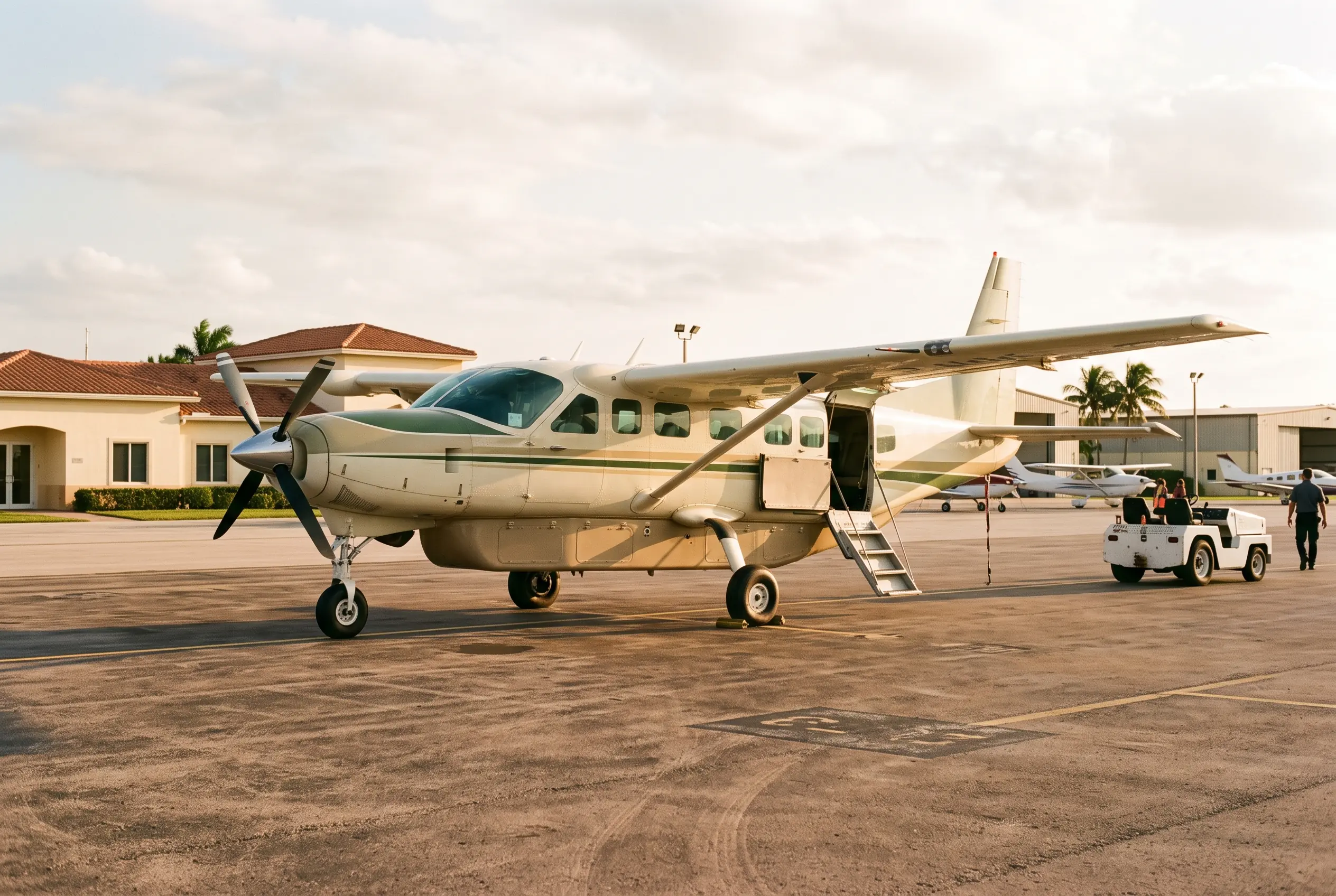
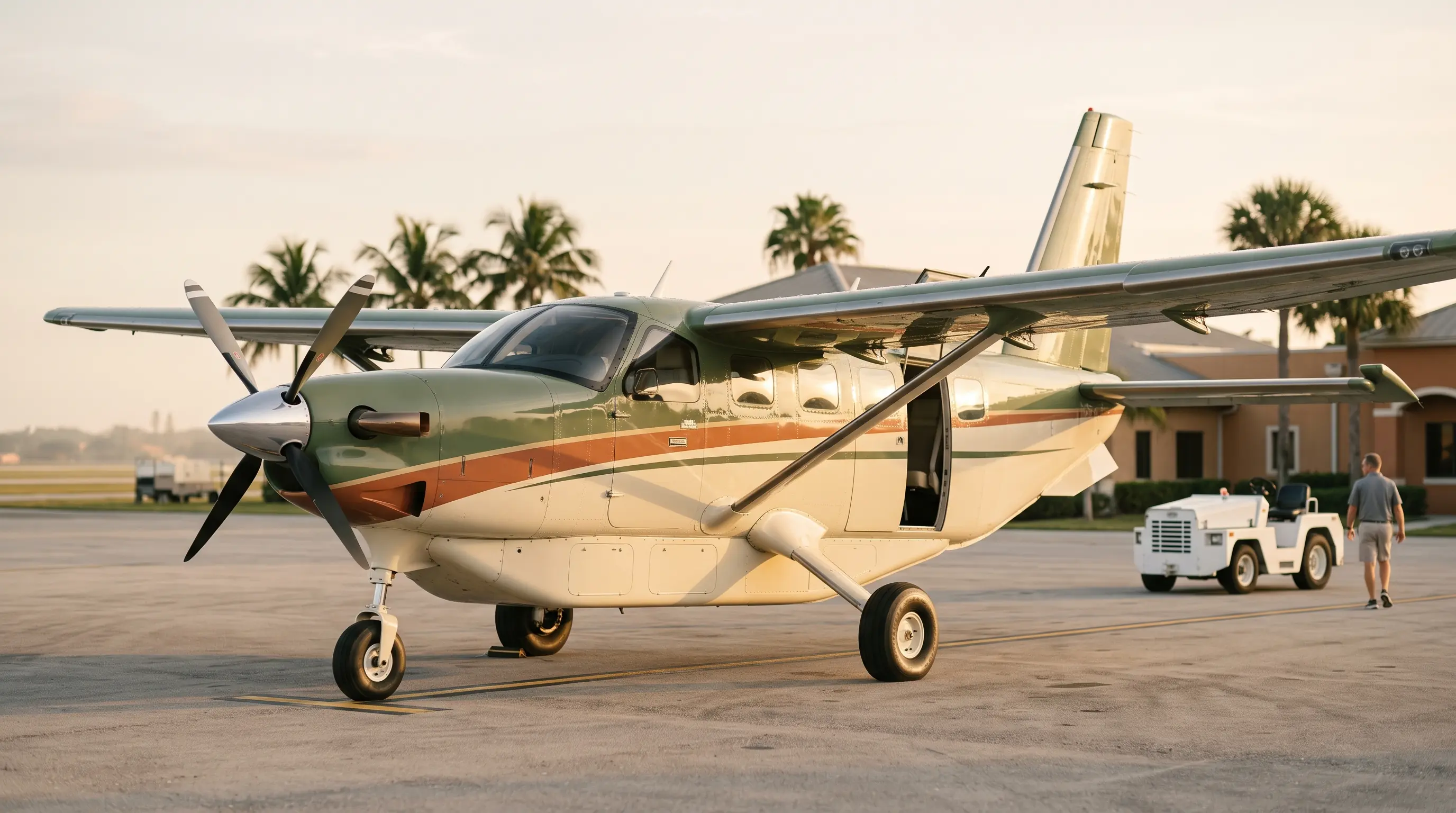
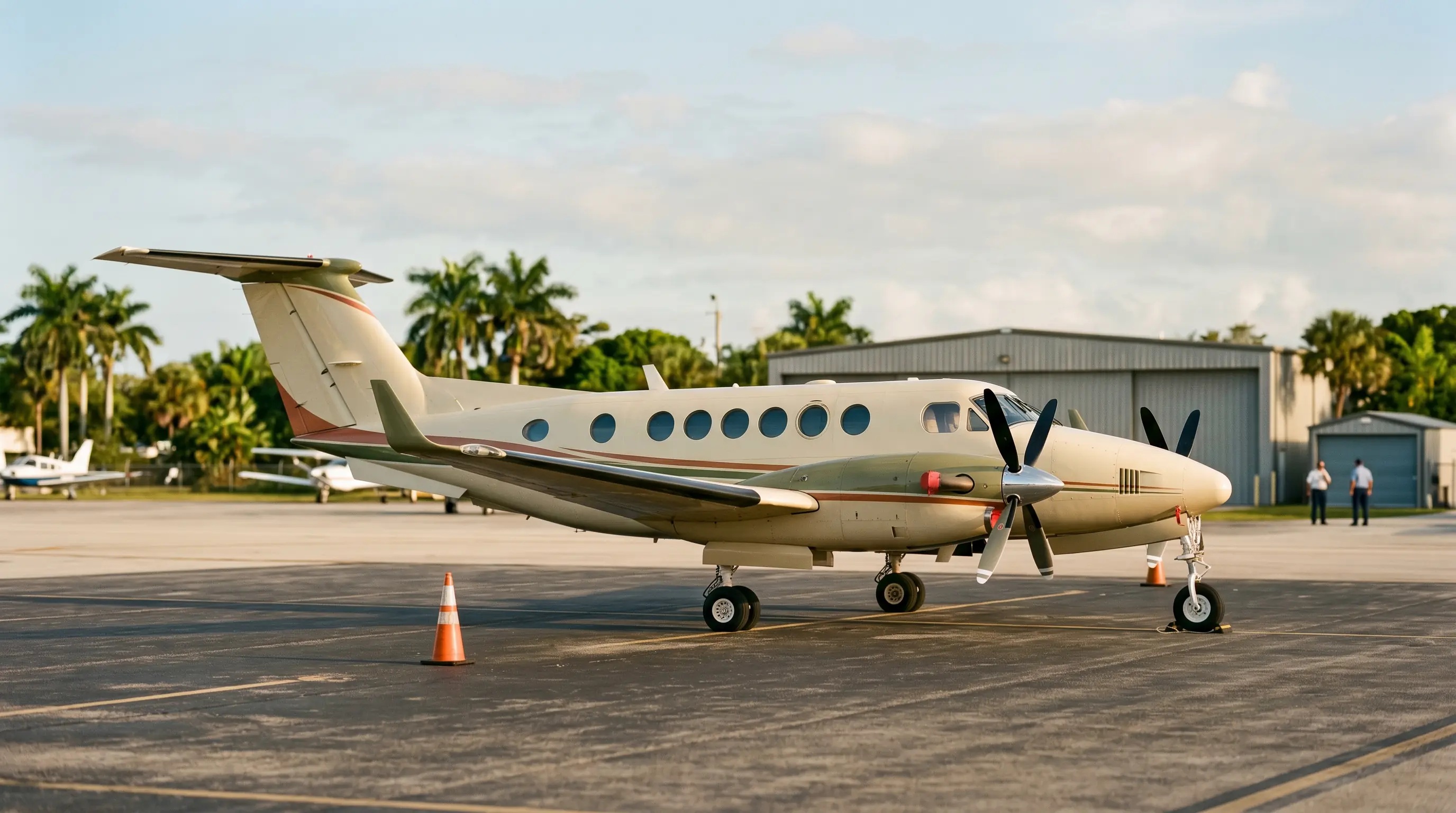
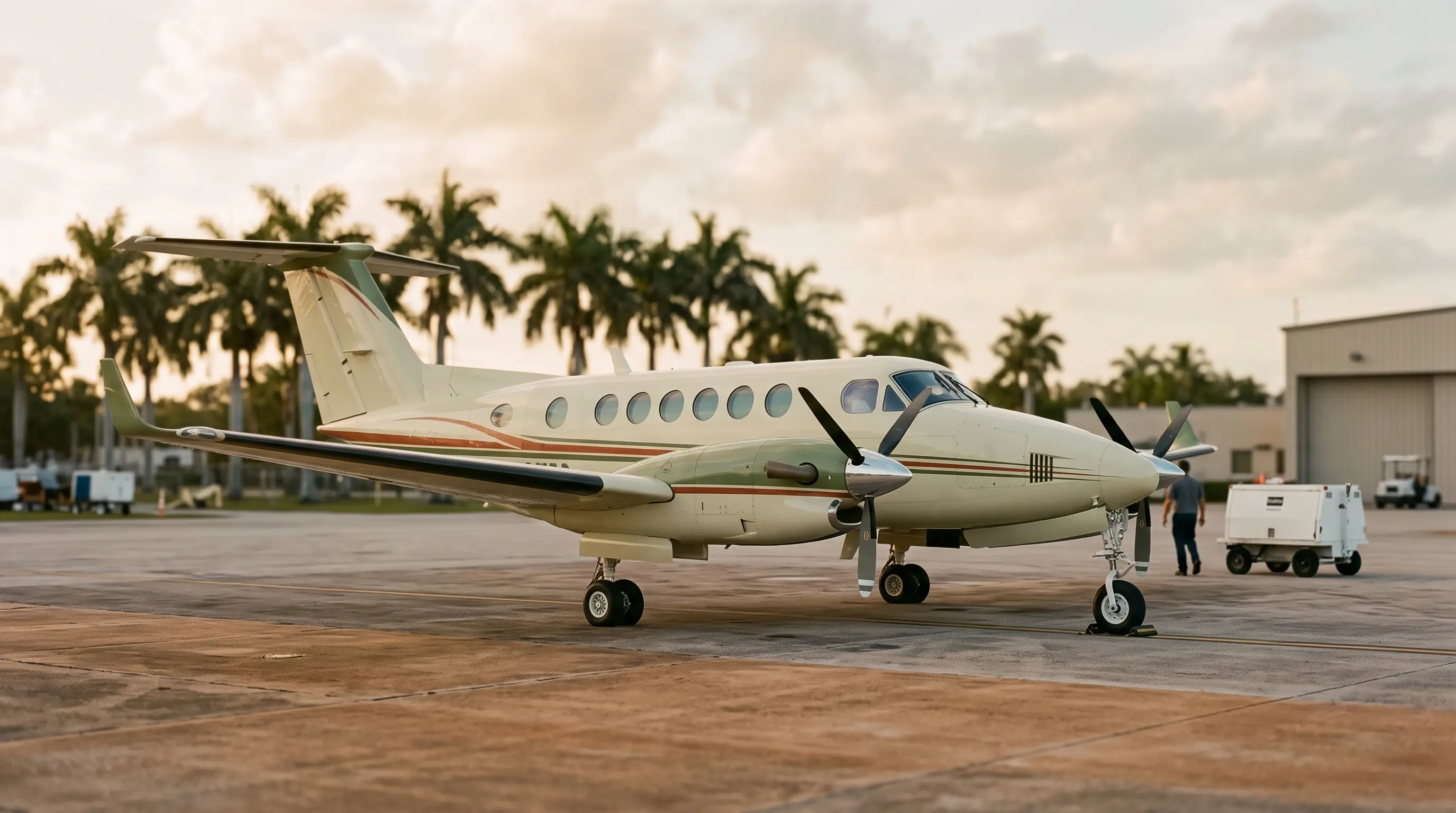
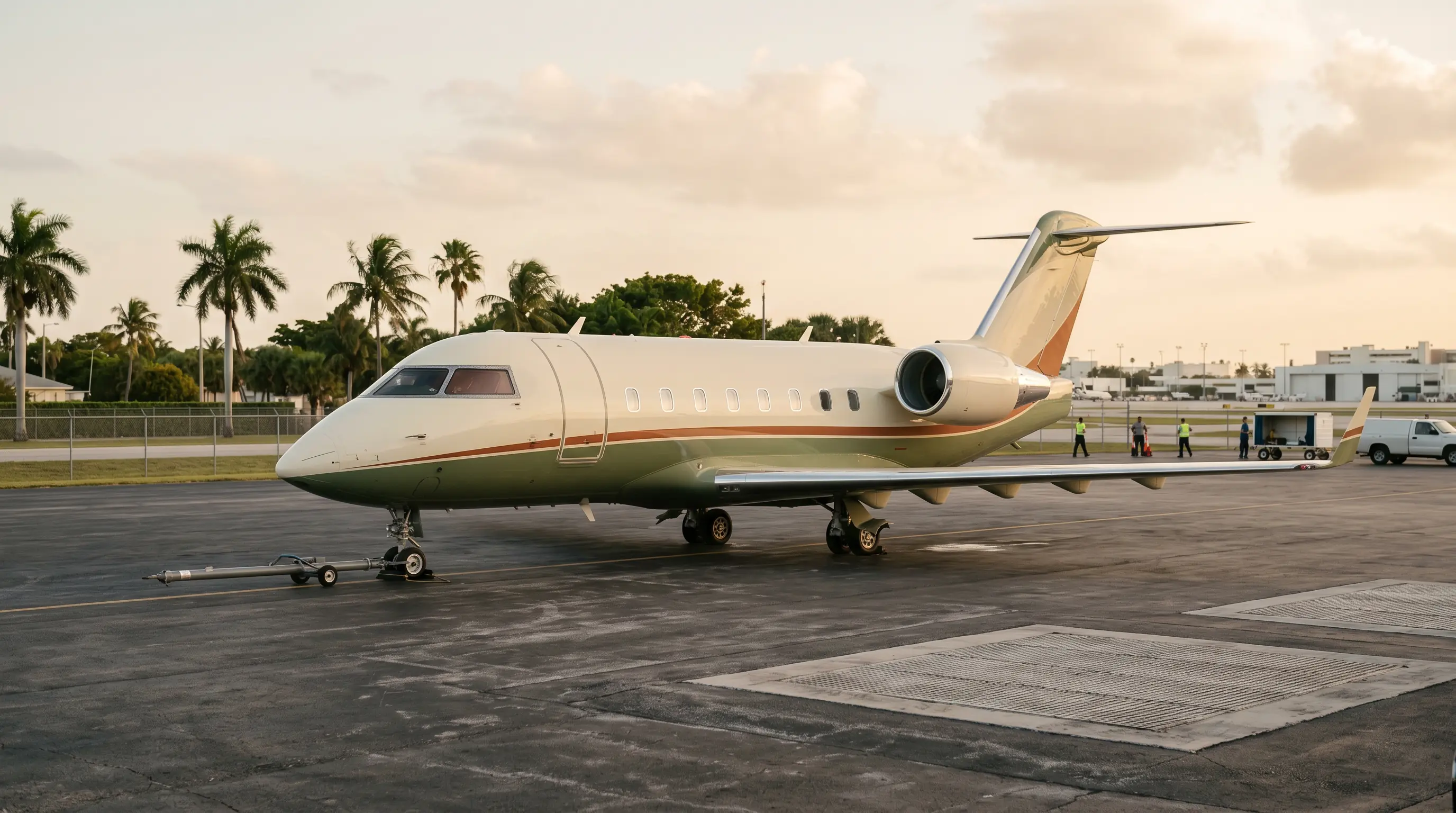
The Grand Caravan EX, inside and out
Charter services for the Miami–New York route
Frequently asked questions
How long does the Grand Caravan EX take from Miami to New York?
Plan a full travel day: about five and a half hours in the air at 185 knots, plus a fuel stop of thirty to forty minutes — call it six to six and a half hours ramp to ramp. The Caravan's 912 nm range cannot cover the 1,000 nm flight nonstop with legal reserves.
Why charter a Grand Caravan on this route at all?
Price and payload. From $5,500 one-way it is the least expensive private option we quote between Miami and New York, and with nine to ten seats plus 111 cu ft of luggage it moves a whole crew and its equipment together. For groups where the day's length matters less than the budget, it is genuinely hard to beat.
Is the Grand Caravan EX comfortable for five-plus hours?
It is utilitarian rather than plush — upright seats, a 4 ft 5 in cabin you move through at a crouch, and no pressurization, so it cruises around 10,000 feet where summer air can be lively. Passengers who treat it like a safari flight do fine. Those expecting a jet cabin should budget for a King Air.
Where does the fuel stop usually happen?
Crews typically plan it in the Carolinas or Georgia — Savannah, Charleston, and Florence are common choices, picked on the day for fuel price and weather. Expect twenty to forty minutes on the ground. You can step out, stretch, and grab a coffee while the aircraft is turned around; the stop is built into your quote.
How much luggage can we actually bring?
More than any jet near the price: 111 cu ft between the aft compartment and the underbelly cargo pod, plus a flat cabin floor for oversized cases when seats are free. Golf trips, band gear, production kit, and bulk samples all travel routinely. Give us dimensions when you book and we will confirm the load plan.
Ready to fly Miami to New York?
Send your dates and party size for estimated pricing across suitable aircraft — typically within two hours, with no obligation.
 +1 (786) 828-5664
  +1 (786) 828-5664
