Flying with Your Pet from Miami to New York
Published · Updated
On a charter, your dog does not travel as freight. She boards up the stairs with you at Miami-Opa Locka Executive Airport (OPF), settles onto a blanket at your feet, and lands at Teterboro Airport (TEB) about two and a half hours later, having never left your side. No cargo hold, no crate waiting in a warehouse, no airline weight limit deciding whether she flies at all. For most pets — and most owners — that changes everything about the trip.
We arrange pet-friendly aircraft for this journey every week, from light jets at about $15,000 one-way to wider cabins for households traveling with several animals. Each FAA Part 135 operator sets its own pet policy — where animals may sit, what restraint they need, any cleaning fee — so we match the tail to your party before quoting. You get one estimated figure, paperwork guidance included.
Estimated pricing for planning — your account manager confirms the final quote.
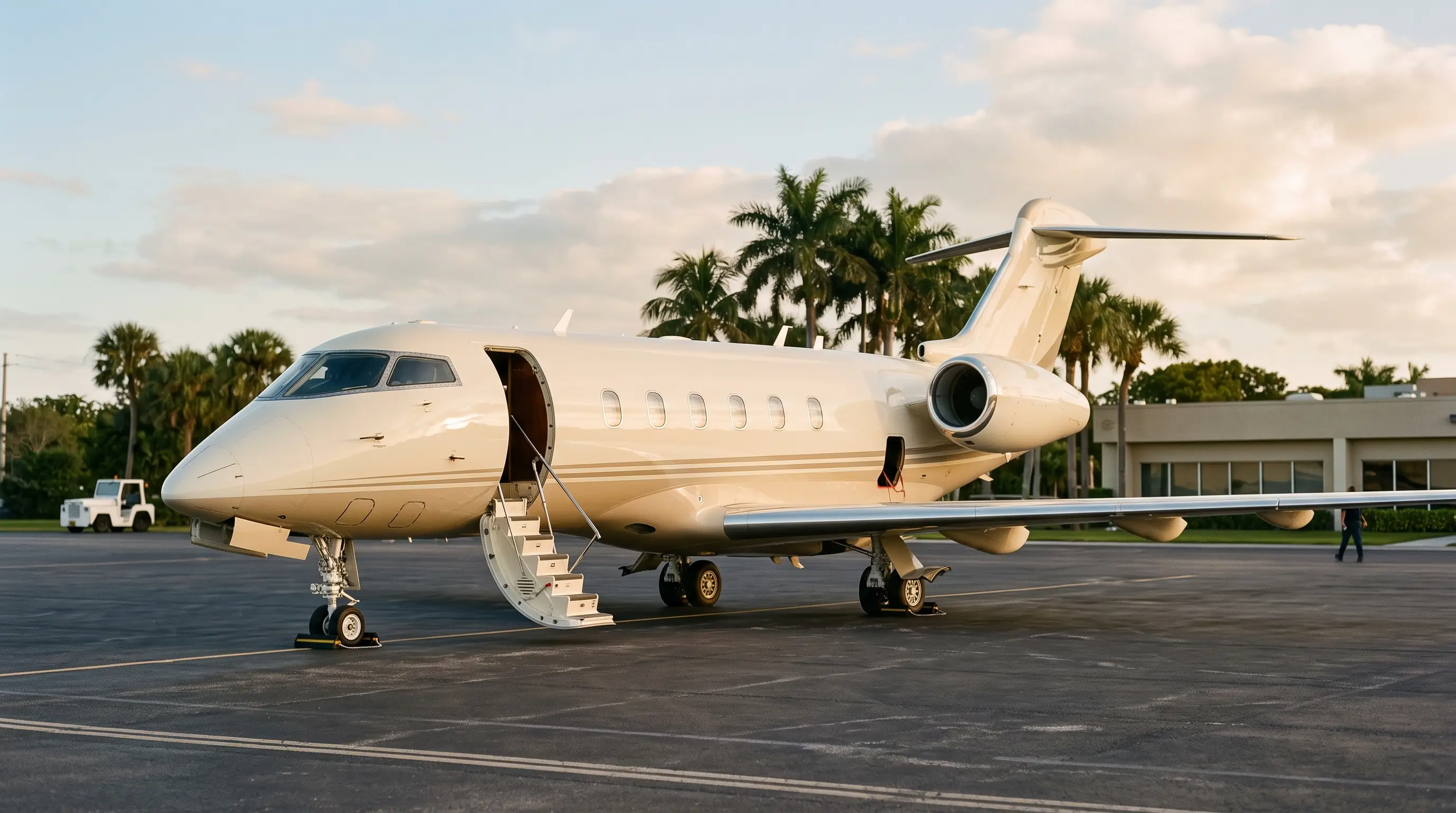
Private charters between Miami and New York typically depart from Miami-Opa Locka Executive Airport (OPF), Fort Lauderdale Executive Airport (FXE), Fort Lauderdale-Hollywood International Airport (FLL), or Miami International Airport (MIA) and arrive at Teterboro Airport (TEB), Westchester County Airport (HPN), Republic Airport (FRG), or Long Island MacArthur Airport (ISP).
How in-cabin pet travel works on this route
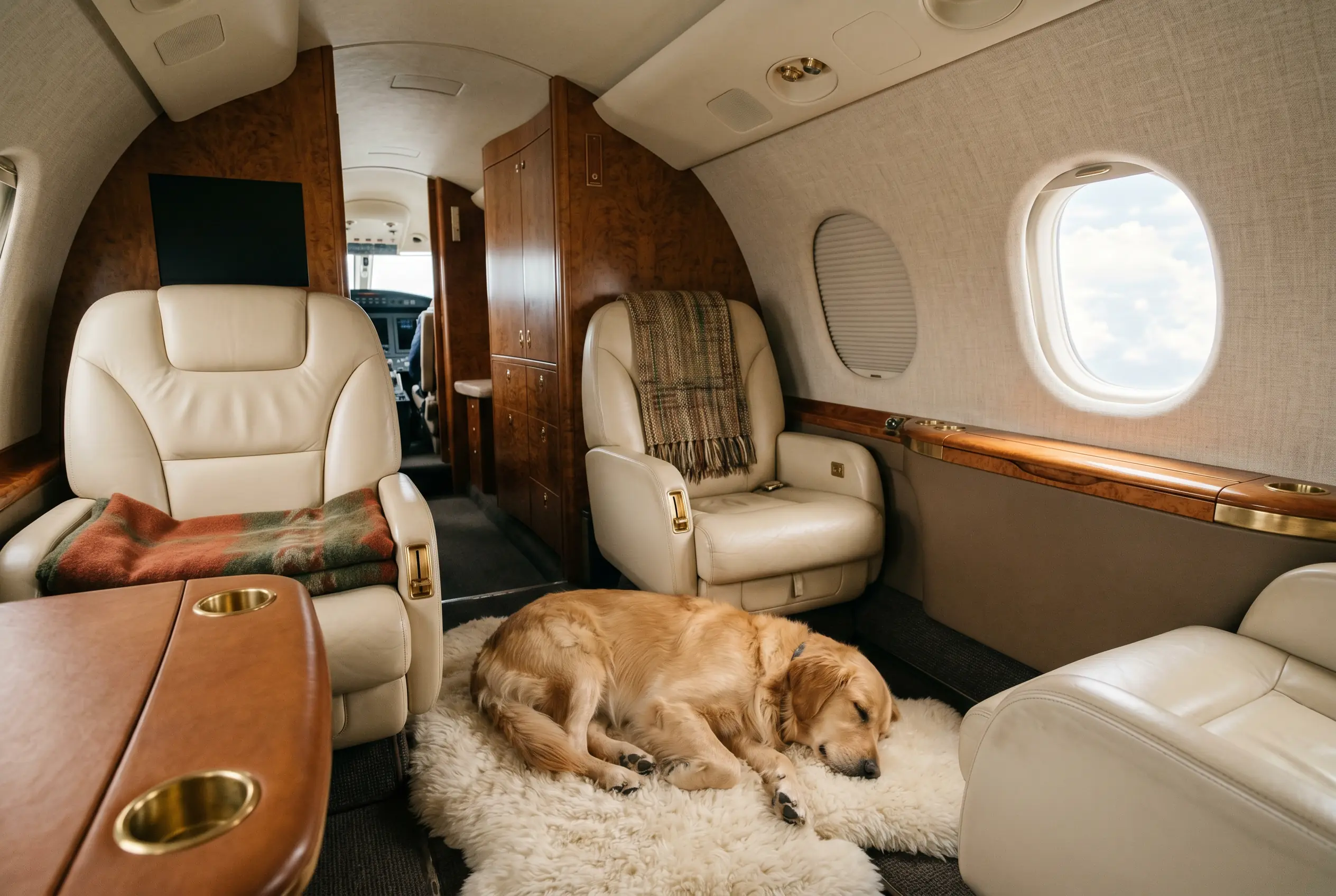
The practical rules are simpler than airline fine print. Small dogs and cats typically ride in a soft carrier or on a lap for taxi, takeoff, and landing, then stretch out once the seatbelt sign relaxes. Larger dogs travel harnessed or settled on a protective throw over the floor or a seat — most operators ask for restraint during the critical phases and are relaxed in cruise. Bring the bed that smells of home, a favorite toy, and a chew for the descent; ears equalize the same way ours do, by swallowing.
Multi-pet households are routine rather than exotic. Two dogs and a cat travel together happily when each animal gets its own territory — a carrier on one seat, a bed by the divan, a lap that belongs to somebody. Operators cap the number of animals per flight at their own discretion, so an accurate census up front matters more than breed or size. Tell us who is flying, in fur terms, and we shortlist tails whose policies say yes rather than maybe.
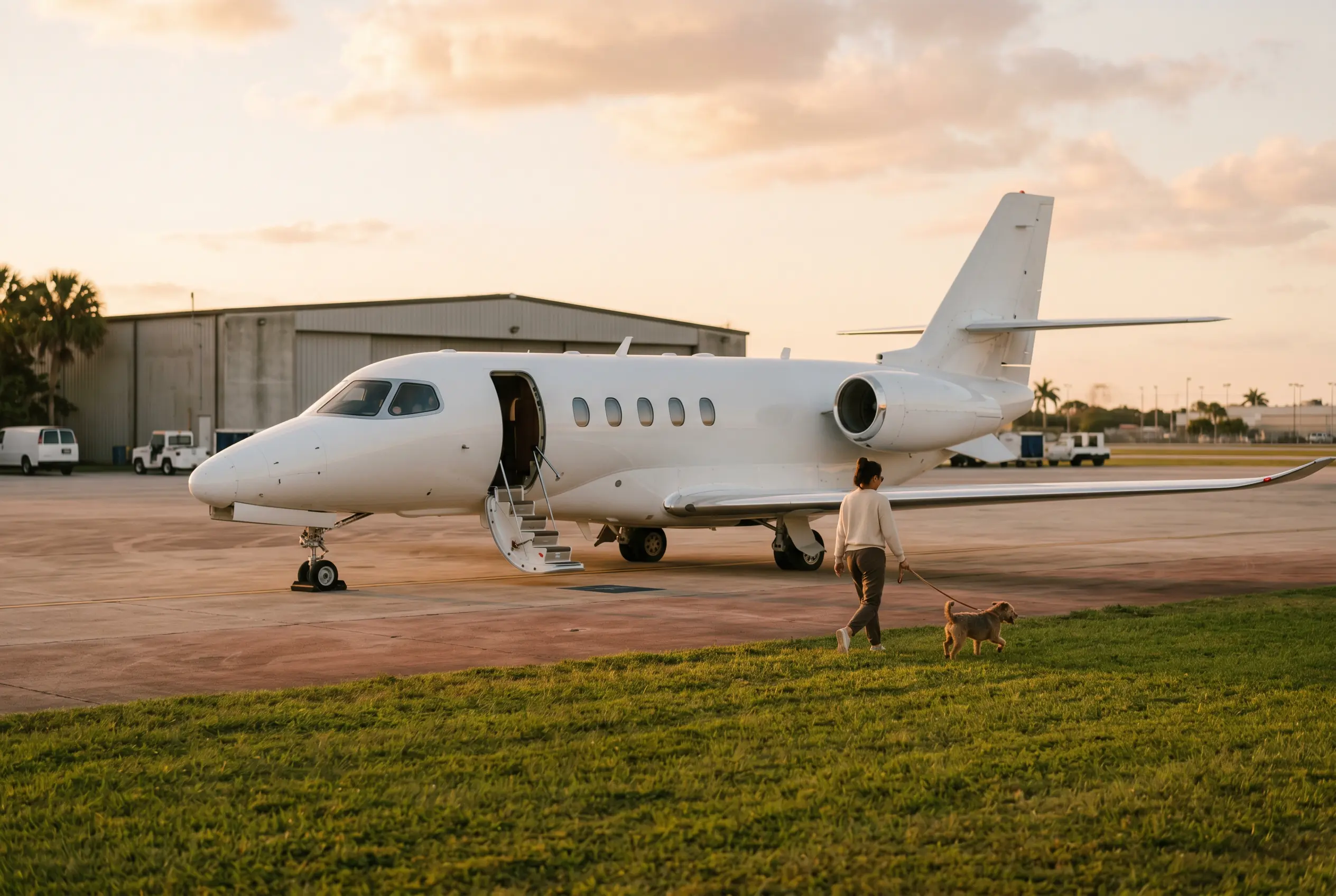
Timing the ground matters more with animals than with people. We schedule a final walk at the FBO before boarding — attendants know exactly where — and at Teterboro the car waits on the ramp, so an anxious traveler goes from cabin to back seat in moments. Domestic legs need no federal pet paperwork, but keep a current rabies certificate in your carry-on; operators like to see it, and it settles most questions before they are asked.
- Pets ride in the cabin with you — never in a hold or terminal kennel
- About 2 h 30 m in the air — inside most animals' comfortable window
- Departures from Opa Locka or Fort Lauderdale Executive Airport (FXE); a last walk before boarding, arranged
- One estimated quote covering the humans, the animals, and any cleaning fee

Cabins pets actually like
Dogs read a cabin the way they read a room. Very light jets are snug — fine for a calm terrier, tight for a Labrador — while midsize cabins add standing height for humans and genuine floor space for a dog bed. For big breeds and multi-pet families, the flat-floor super-midsize class is the sweet spot: a Challenger 350 cabin runs 7 ft 2 in wide, room for a large dog to lie flat in the aisle without blocking a soul.
Tell us the species, breed, weight, and temperament when you inquire — it genuinely changes which tails we propose. Some operators welcome any animal that fits through the door; others cap numbers or sizes, and a few charge a post-flight cleaning fee that belongs in your quote, not on your invoice as a surprise. If the household is relocating for the season, our leisure desk plans the whole move around the animals.
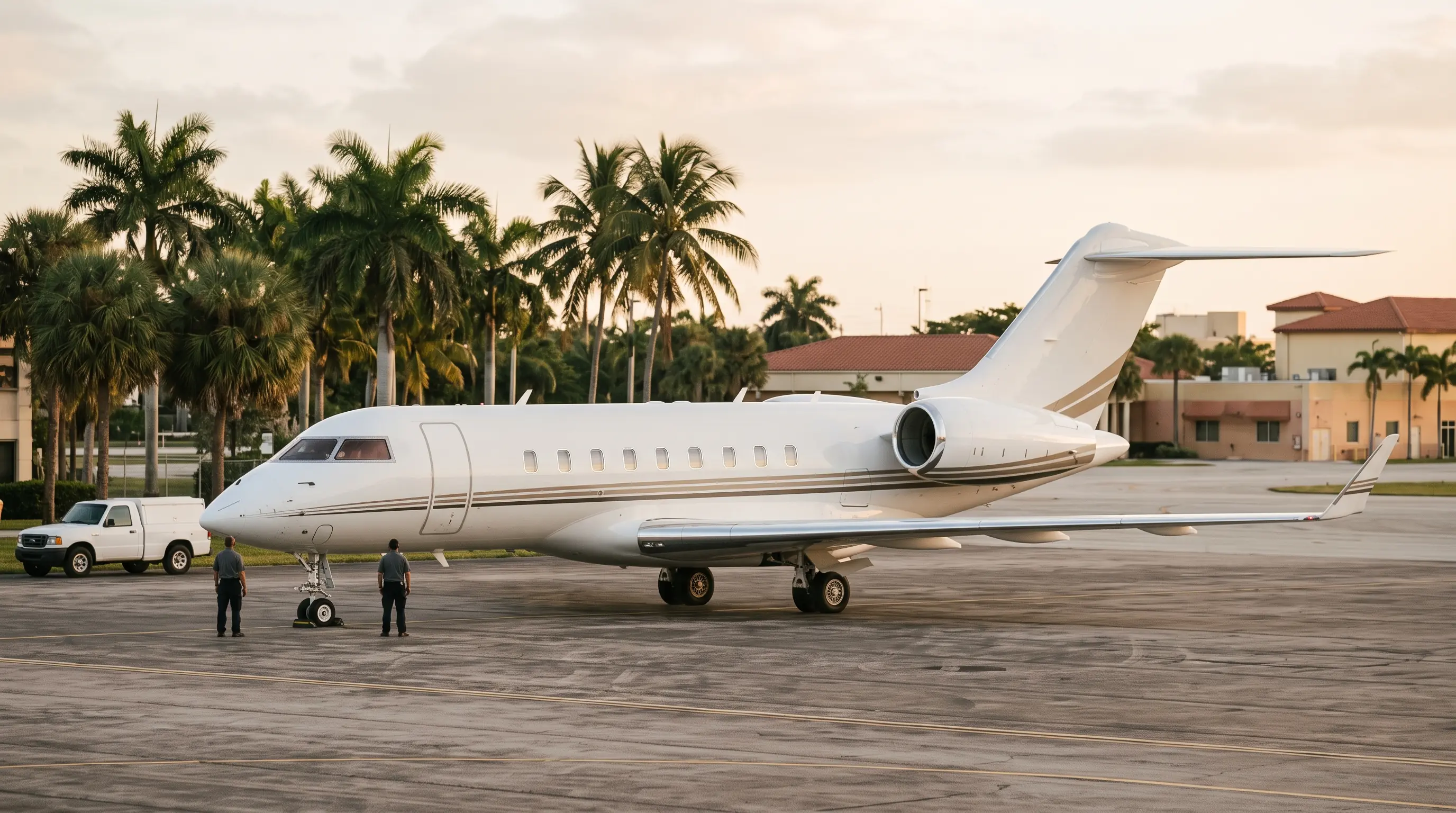
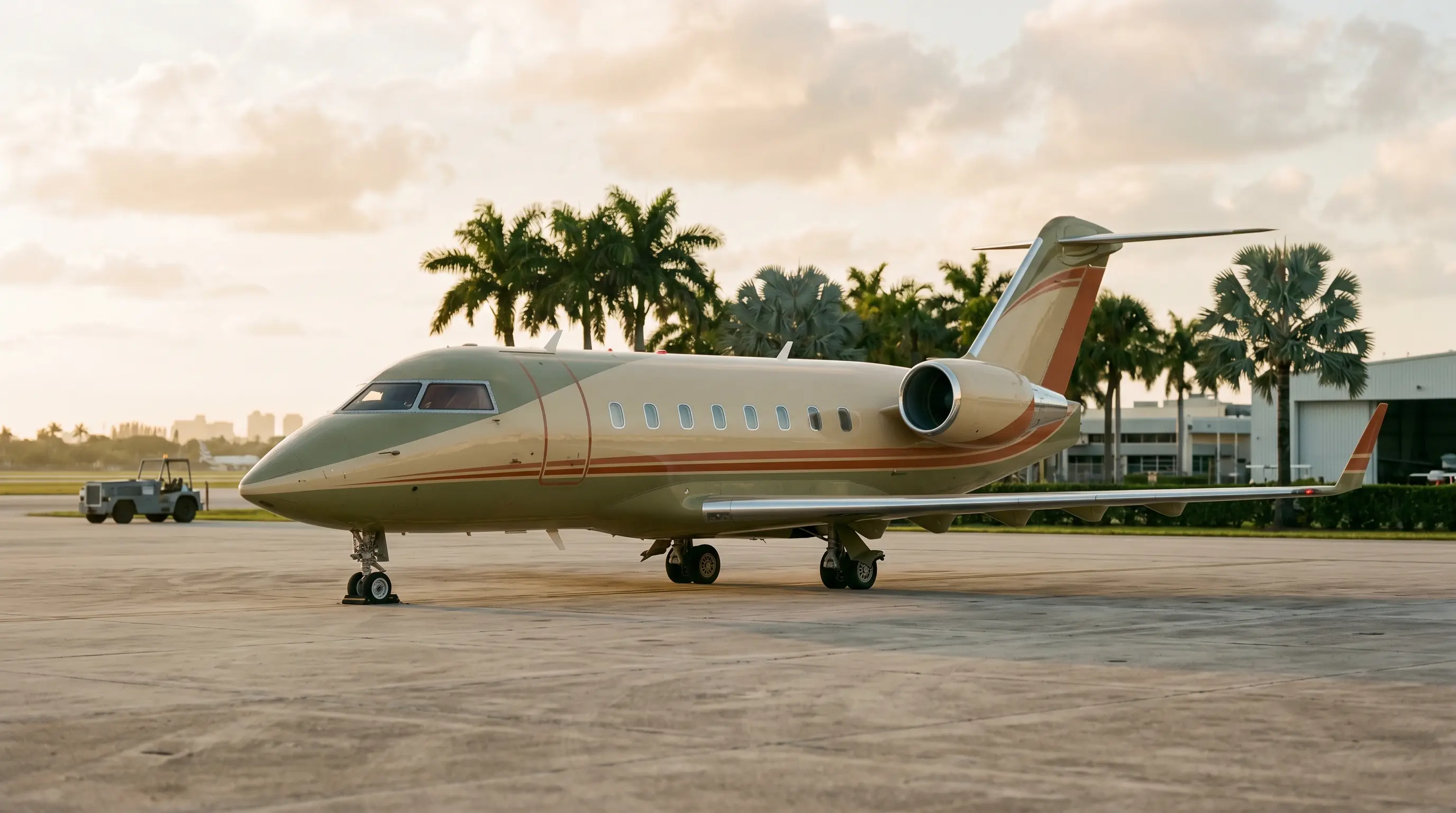
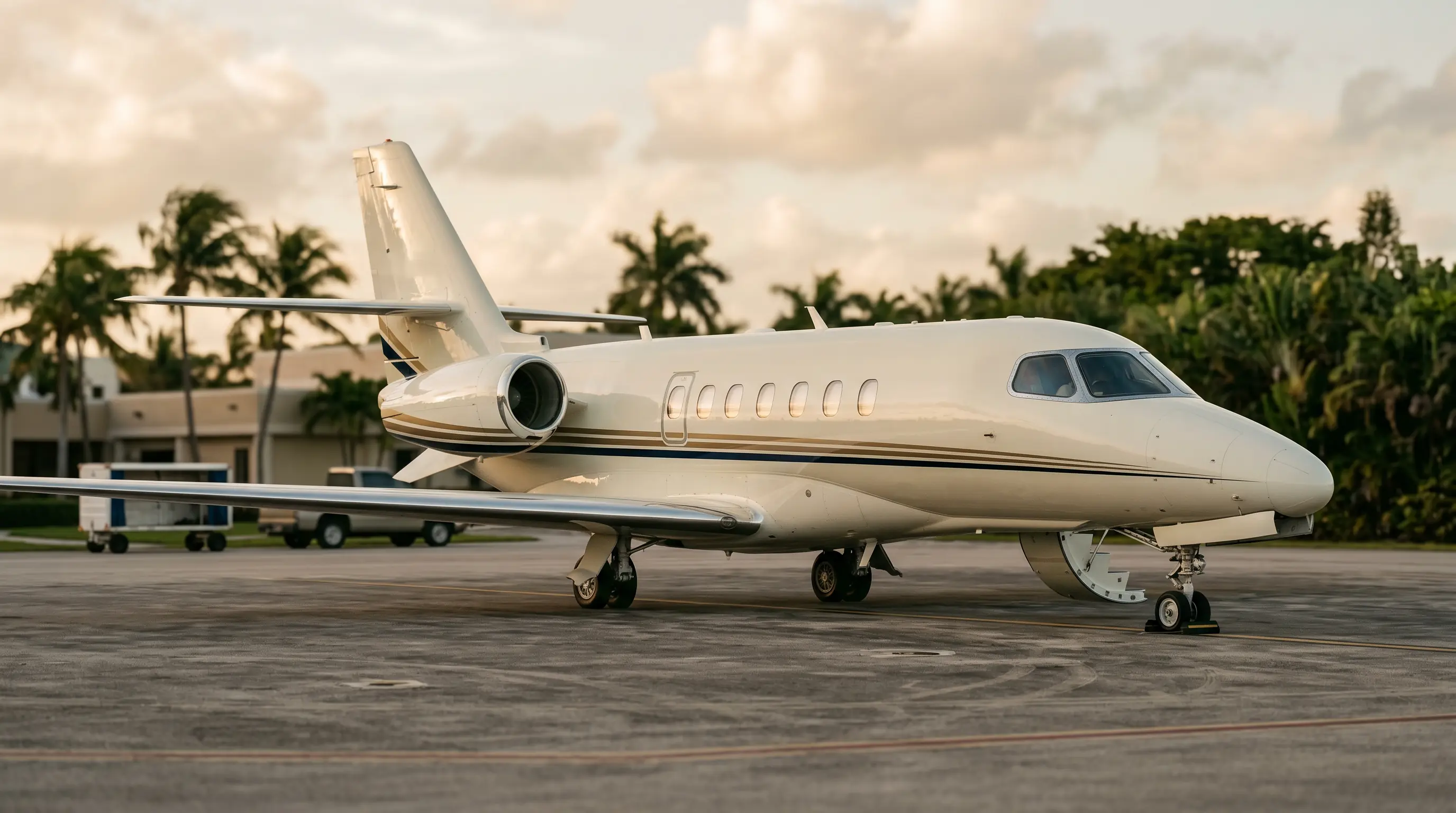
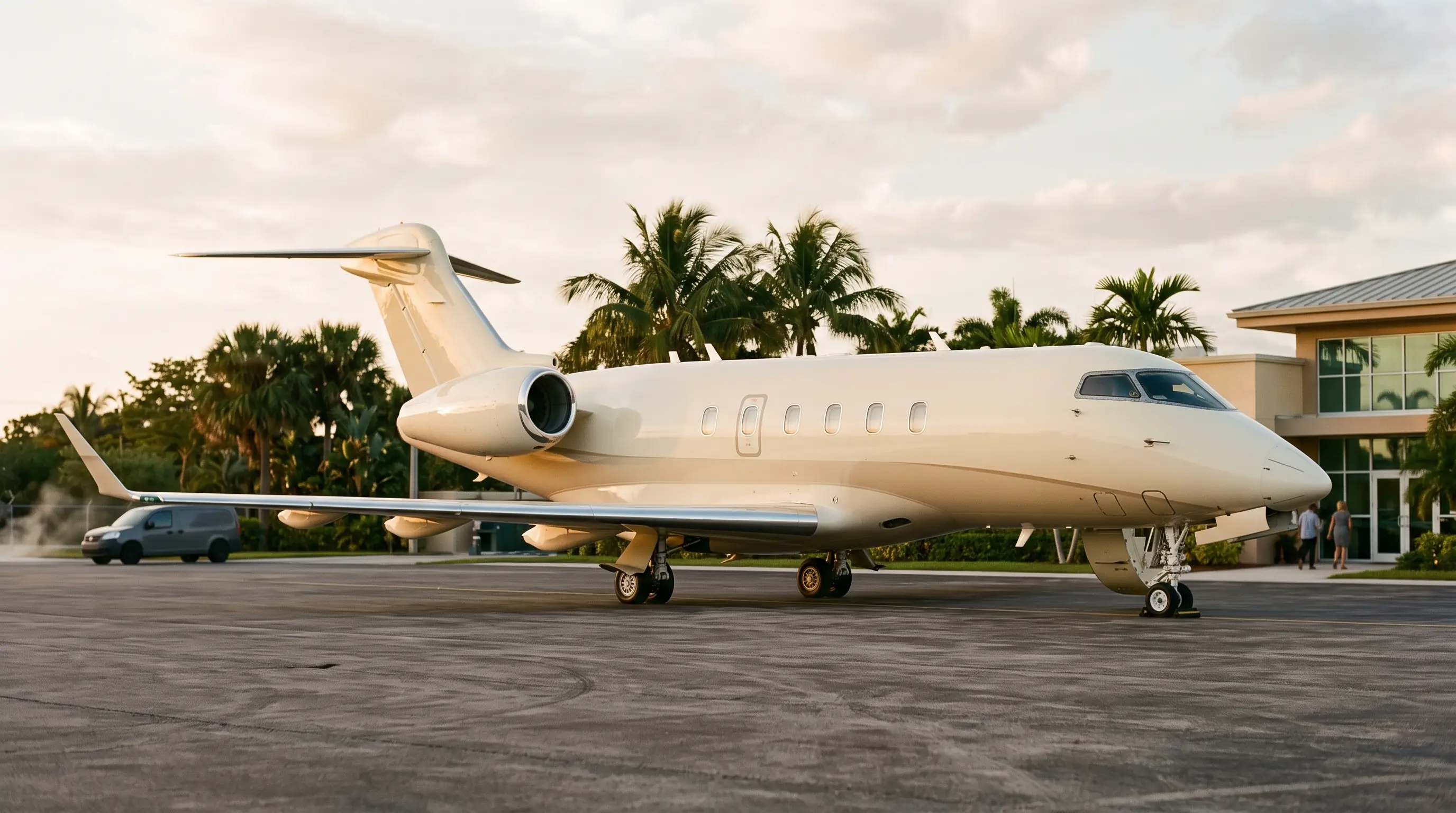
Pets Charter Flights gallery
Frequently asked questions
Do pets really stay in the cabin for the whole flight?
Yes. There is no pet hold on a charter aircraft — your animal boards with you, stays beside you for the roughly two-and-a-half-hour flight, and walks off with you at the other end. Restraint is usually required for taxi, takeoff, and landing; in cruise, most operators are happy with a settled pet at your feet.
What paperwork does a dog need between Florida and New York?
For a domestic flight there is no federal requirement, but carry a current rabies certificate — operators commonly ask for it, and state rules on both ends expect vaccinated animals. If your pet is unusual — a bird, a reptile, anything exotic — tell us early so we can confirm the operator's policy before quoting.
Is there a fee for bringing pets aboard?
Often no, sometimes a modest cleaning fee — it depends on the operator and the animal. Where a fee applies we build it into the estimated quote up front, so the figure you approve is the figure you pay. Heavy shedding seasons and multiple large dogs are the usual triggers.
Which aircraft works best for two large dogs?
A flat-floor cabin with real width. Super-midsize jets such as the Challenger 350 — 7 ft 2 in across, typically $26,000–$36,000 one-way here — give two big dogs room to lie down without negotiating. One large, calm dog travels well in a midsize cabin; small pets are comfortable in almost anything.
Should we sedate our cat or dog before flying?
Generally no — most operators and veterinarians discourage sedation for healthy animals, and the flight is short. A long walk before boarding, a familiar blanket, and a quiet cabin do more than medication. If your vet has specific advice for an anxious animal, we will pass any handling notes to the crew.
Ready to fly Miami to New York?
Send your dates and party size for estimated pricing across suitable aircraft — typically within two hours, with no obligation.
 +1 (786) 828-5664
  +1 (786) 828-5664
