Piaggio Avanti EVO Charter: Miami to New York
Published · Updated
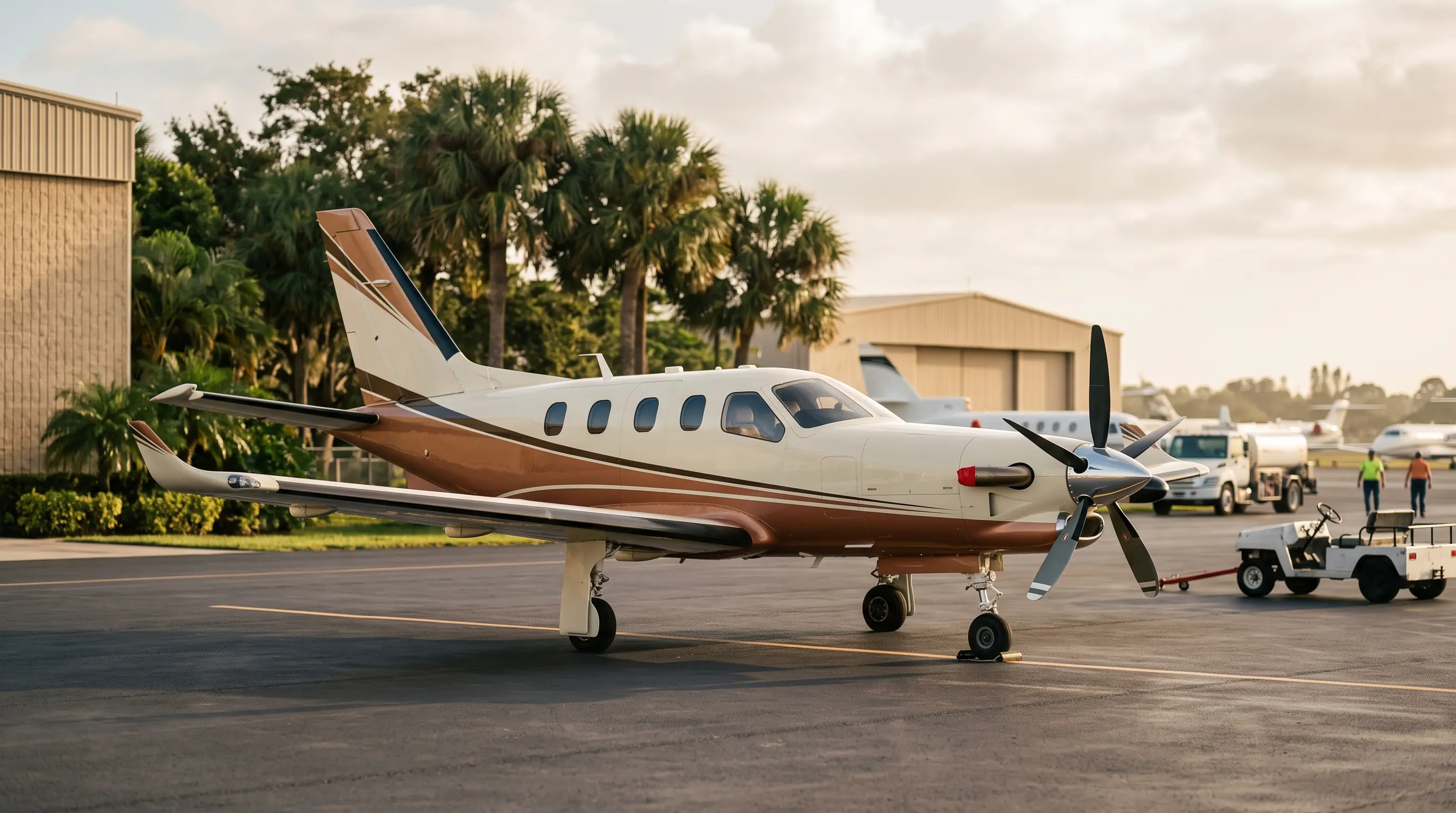
Every rule this site tells you about turboprops — slower, smaller, cheaper — the Avanti EVO breaks except the last one. Piaggio Aerospace hung two pusher PT6As behind a slippery three-surface airframe and got 402 knots, quicker than several light jets, wrapped around a cabin you walk into upright: 5 ft 9 in tall and 6 ft 1 in wide, the widest of any turboprop we arrange.
The result is startling: Miami to New York in about two hours forty minutes, ten or so minutes behind a Phenom or Citation, at $9,500 to $14,500 one-way — several thousand less than jets with comparable cabins. The honest catch is scarcity: only a handful of Avantis work the East Coast charter market, so dates need luck or lead time.
- 1,510 nm range
- 402 ktas cruise
- 6–7 passengers
Estimated pricing for planning — your account manager confirms the final quote.
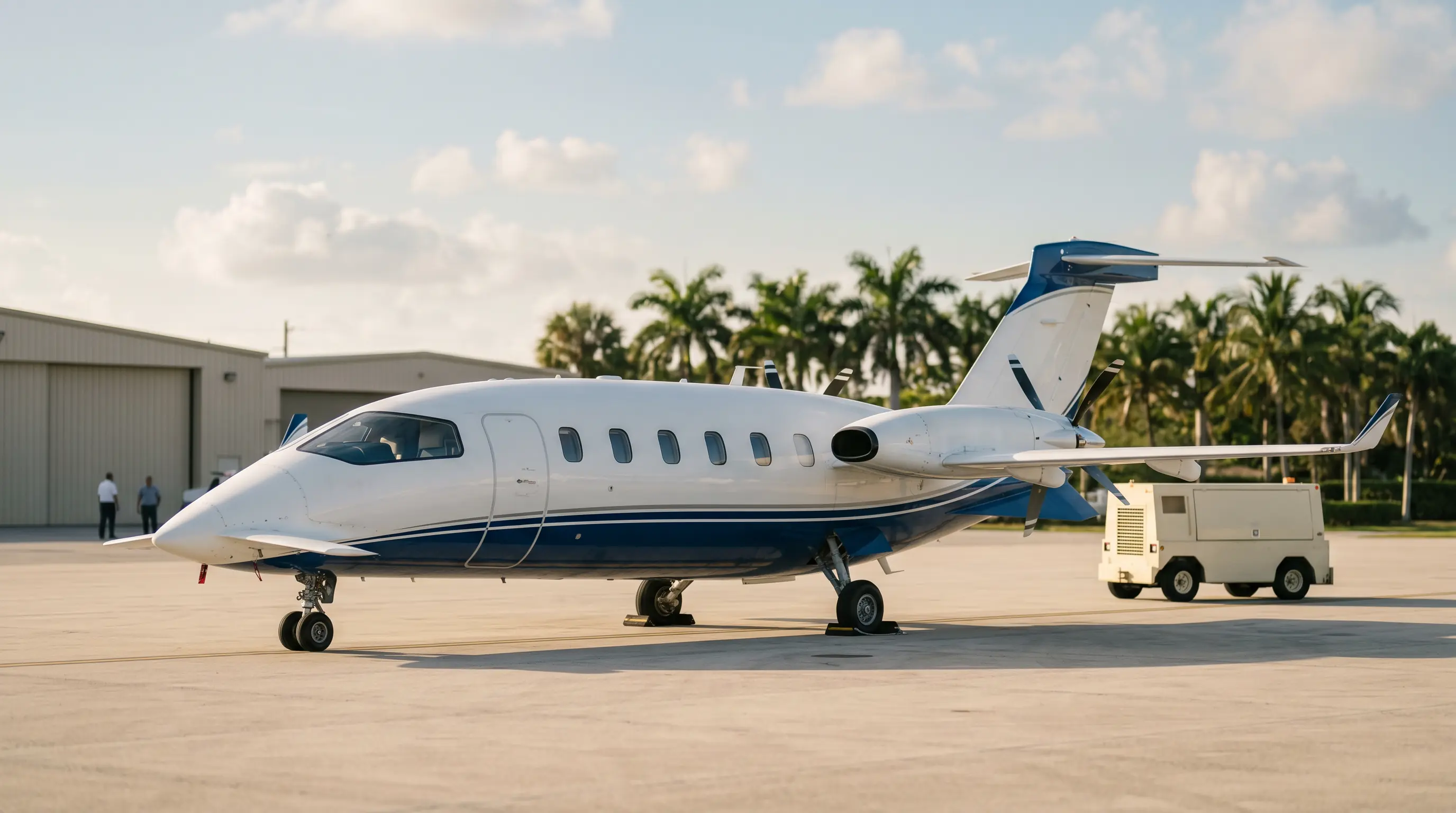
Private charters between Miami and New York typically depart from Miami-Opa Locka Executive Airport (OPF), Fort Lauderdale Executive Airport (FXE), Fort Lauderdale-Hollywood International Airport (FLL), or Miami International Airport (MIA) and arrive at Teterboro Airport (TEB), Westchester County Airport (HPN), Republic Airport (FRG), or Long Island MacArthur Airport (ISP).
Avanti EVO specifications
Manufacturer performance figures — Piaggio Aerospace.
- 1,510 nm
- Max range
- 402 ktas
- Cruise speed
- 6–7
- Passengers
- 5 ft 9 in
- Cabin height
- 44 cu ft
- Luggage
- 41,000 ft
- Service ceiling
Jet time on turboprop fuel — how the Avanti does it
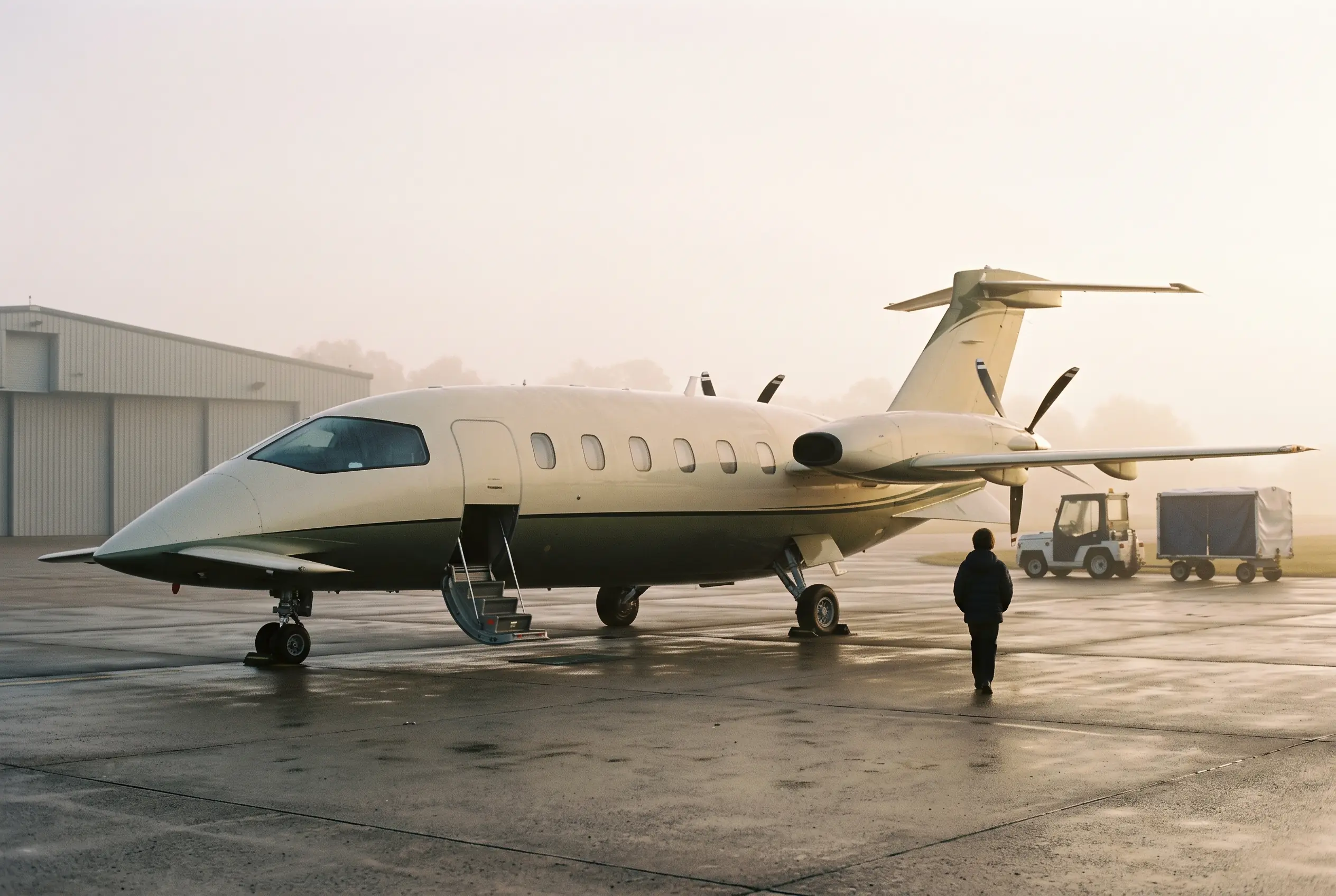
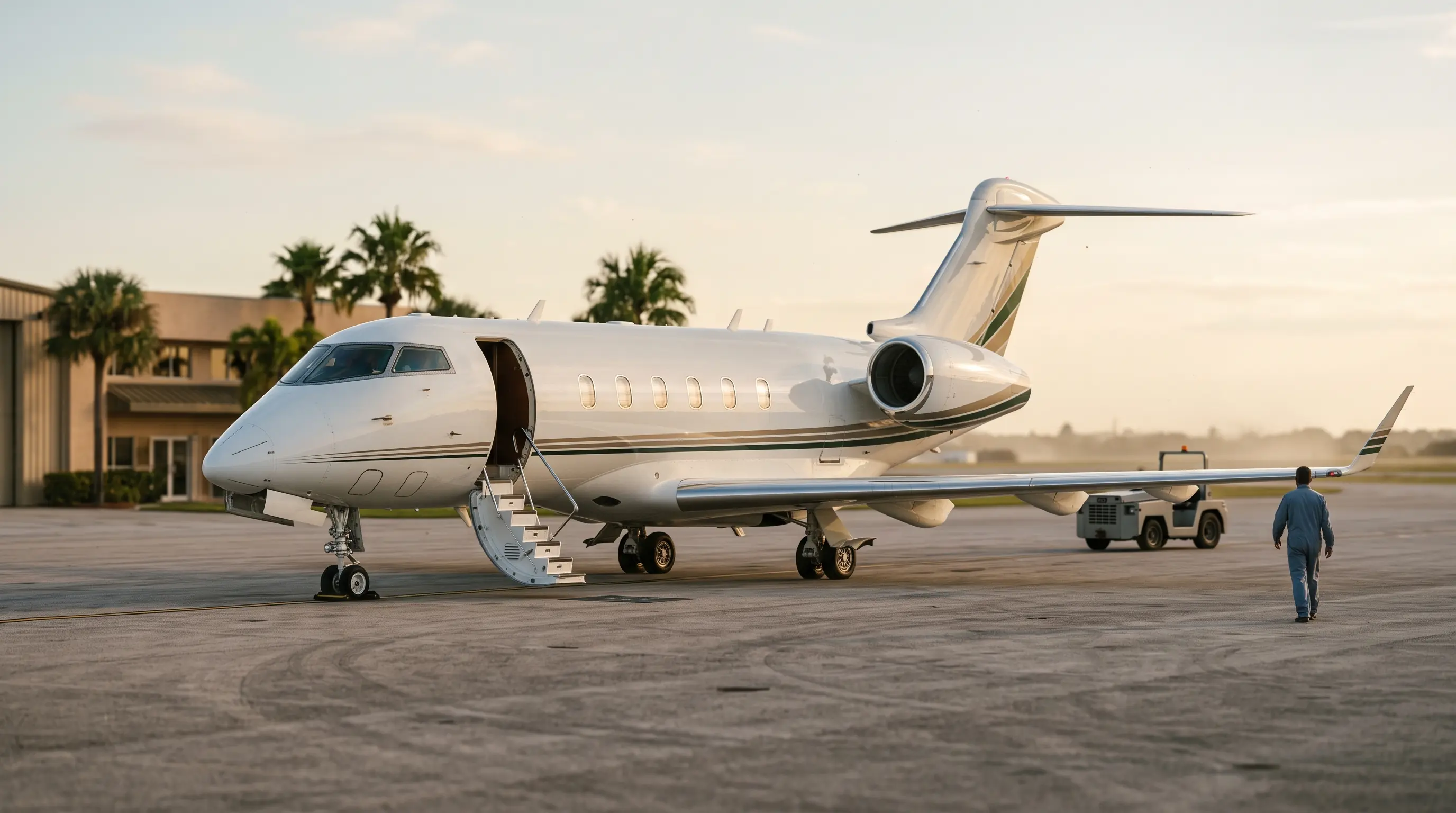
The design is the story. A forward canard, a laminar-flow wing set mid-fuselage, and pusher propellers let the Avanti cruise where light jets cruise — up to 41,000 feet, above much of the weather that bounces conventional turboprops — while burning propeller quantities of fuel. That efficiency is what funds the price gap: you are paying turboprop operating costs for block times within rounding distance of a light jet. Wheels-up from Miami-Opa Locka Executive Airport (OPF) at nine and, traffic permitting, curbside in Manhattan for lunch.
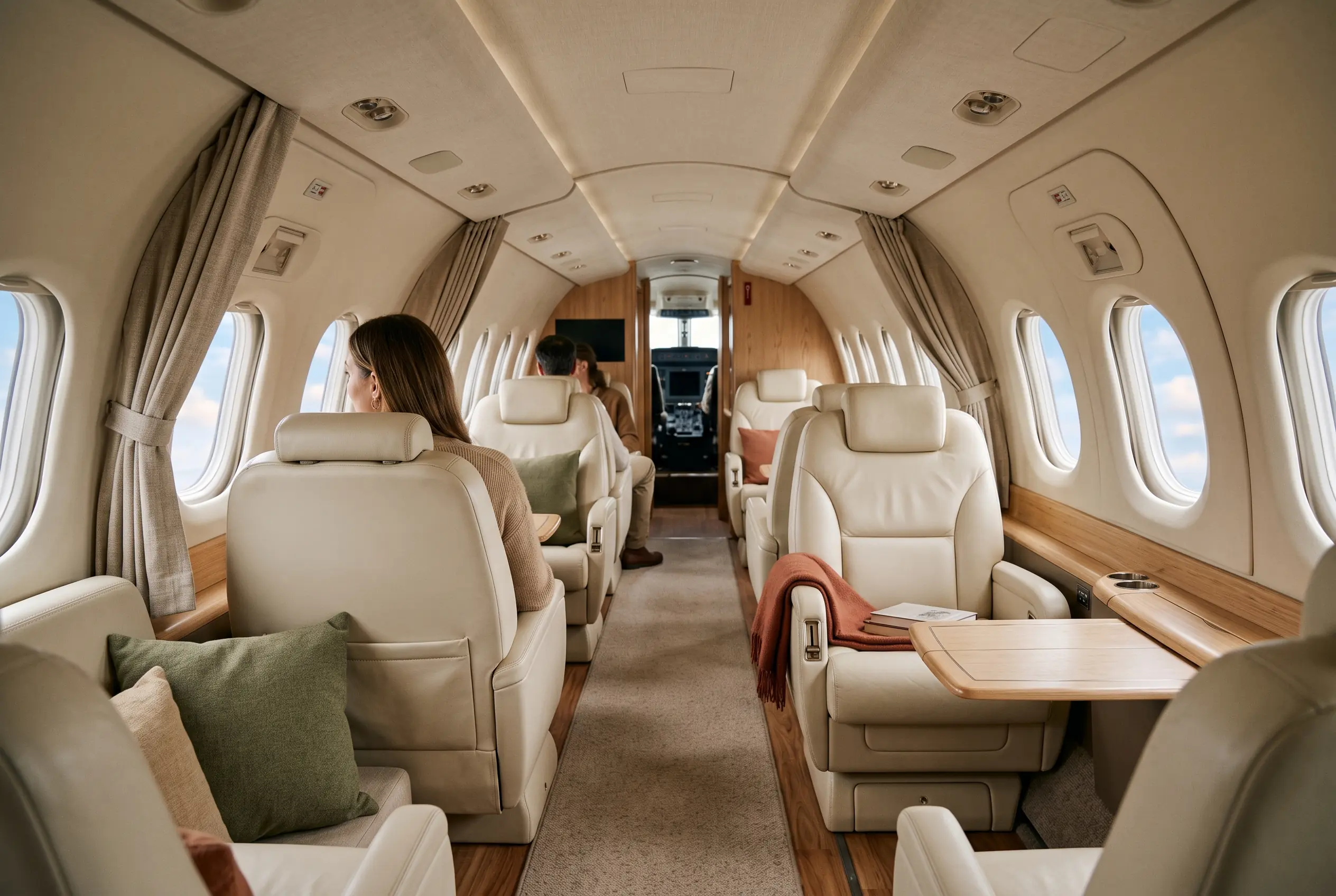
Then there is the cabin, which few other turboprops approach. Because the wing spar passes behind the passenger compartment and the engines sit aft, the room is uninterrupted: stand-up height, midsize-jet width, six or seven armchairs with a real aisle, and 44 cu ft of luggage behind. It is also remarkably quiet inside — the propellers push from behind rather than beat the cabin walls, so conversation stays at library volume while the famous exterior howl stays outside with everyone else.
Who is it for? Travelers who would book a light jet but resent the invoice; parties of five or six who want to stand, stretch, and hold a meeting mid-air; anyone who simply loves interesting machinery — the Avanti collects admirers on every ramp it visits. It gives up little on this route: Teterboro Airport (TEB) and Westchester County Airport (HPN) handle it easily, and the 1,510-mile range covers it nonstop with wide margins in both directions.
- About 2 h 40 m Miami to New York — genuine light-jet pace
- Stand-up 5 ft 9 in cabin, the widest in the turboprop class
- From $9,500 one-way: thousands under comparable jet quotes
- Cruises to 41,000 ft, above most East Coast weather

The candid footnotes
Scarcity is the practical constraint. The Avanti fleet is small and devoted — owners tend to fly their own — so charter availability between Florida and the Northeast comes and goes. Give us a week where you can and we will find one; give us a day and we will tell you honestly whether it exists. When it does, expect an aircraft flown by crews who chose the type deliberately, operating under FAA Part 135 like everything we arrange, with pricing that embarrasses the jets parked either side of it.
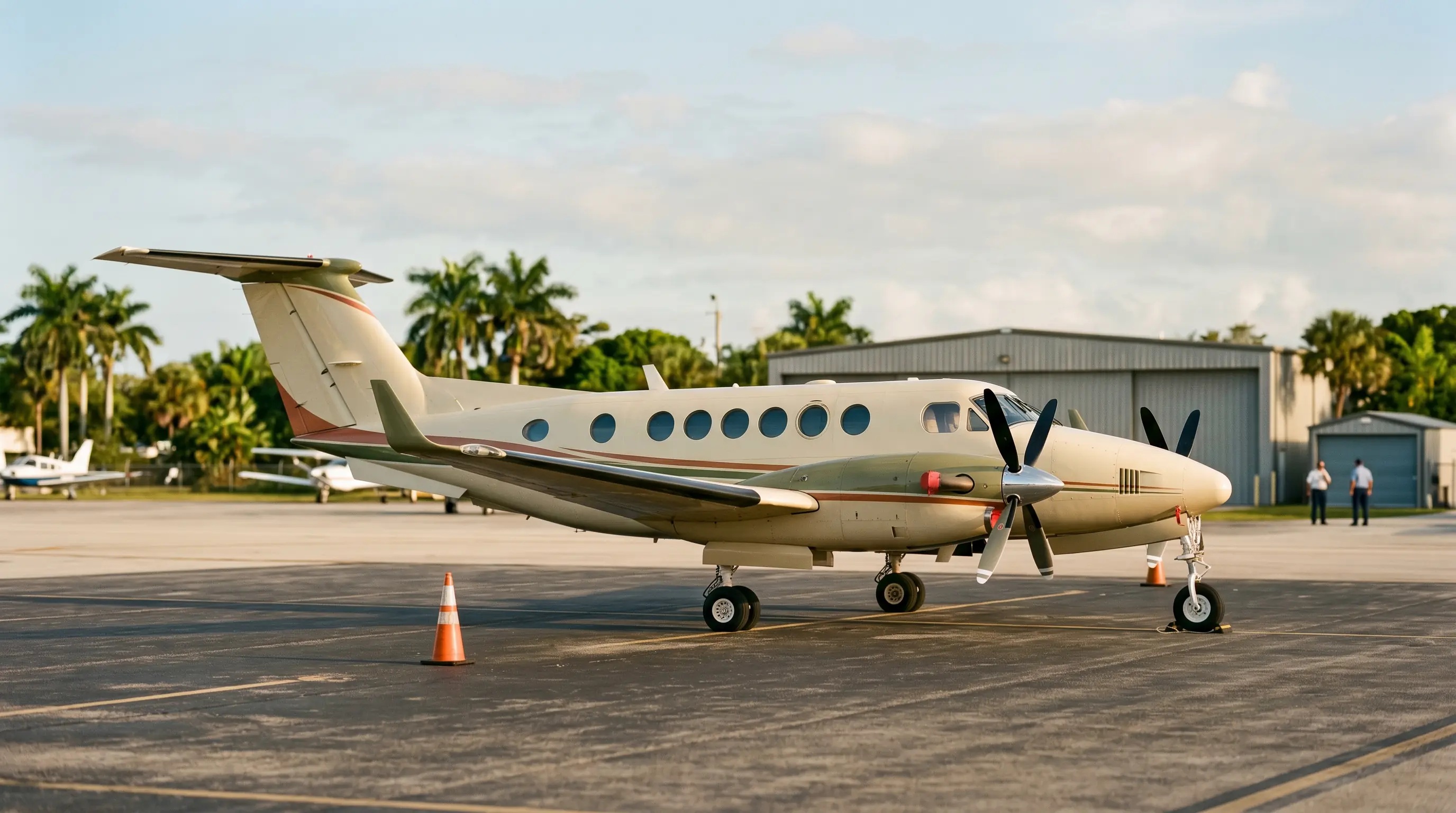
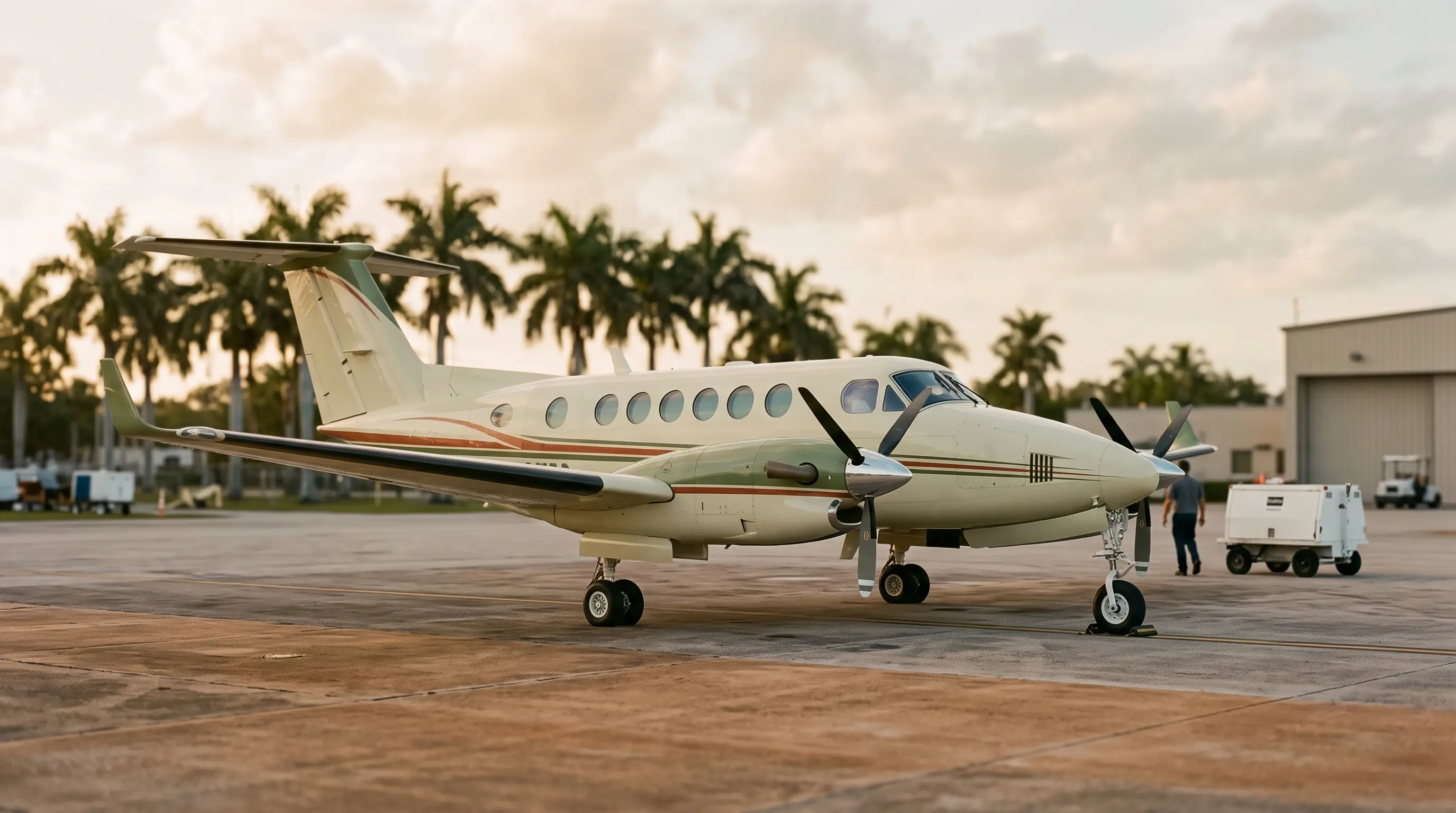
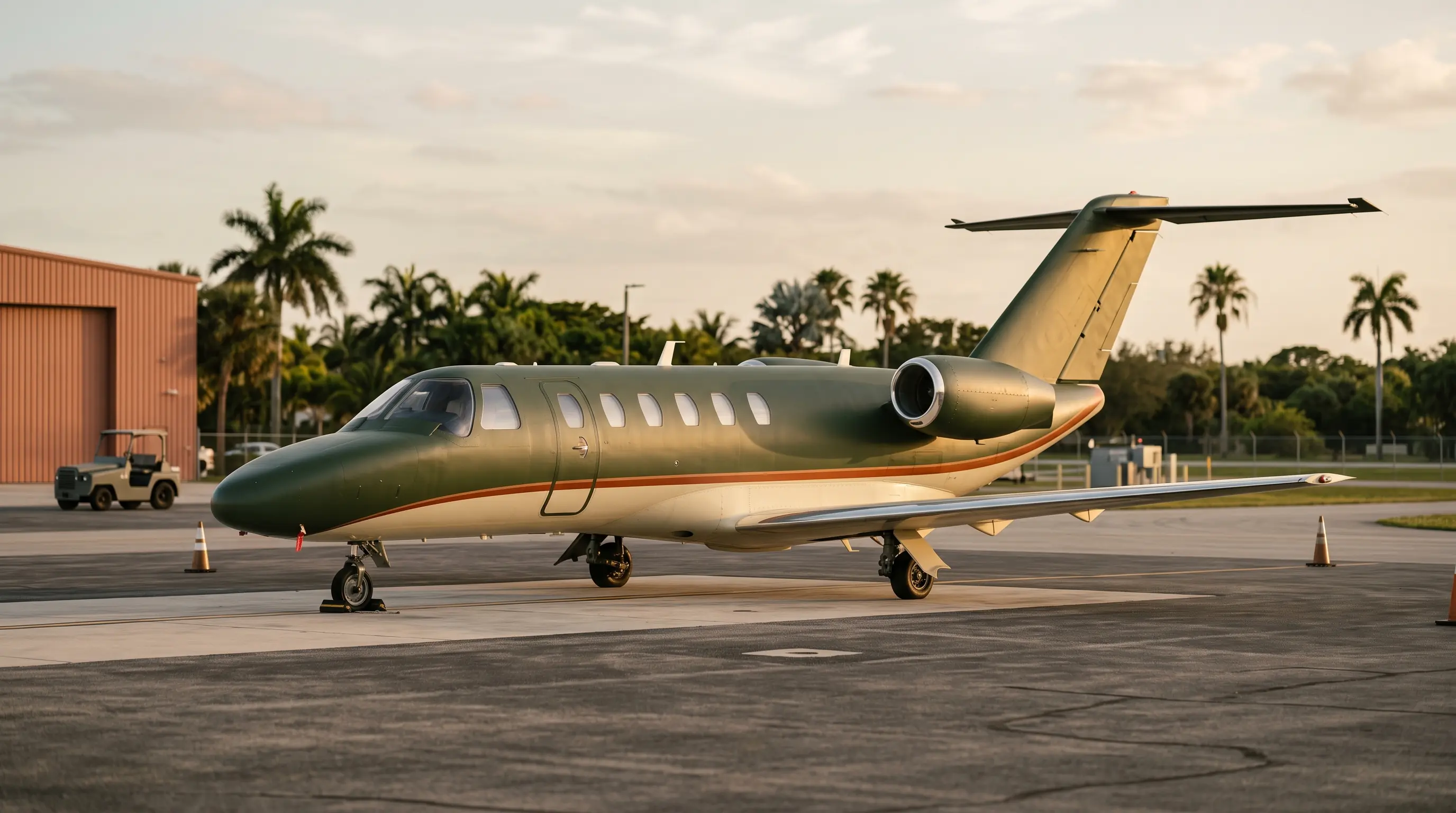
If no Avanti is available, nothing else replicates it — so we substitute by priority. Speed first: a light jet such as the Citation CJ3 restores the block time for a few thousand more. Cabin first: a King Air 350i keeps eight seats and turboprop pricing, forty minutes slower. Tell us which side of the Avanti's bargain mattered and the fallback picks itself.
The Avanti EVO, inside and out
Charter services for the Miami–New York route
Frequently asked questions
Is the Avanti EVO really as fast as a jet?
Against the light jets on this run, effectively yes. Its 402-knot cruise puts Miami to New York at about 2 h 40 m, roughly ten minutes behind a Phenom 300E and ahead of several older light jets. No other turboprop is in the conversation.
What does an Avanti EVO charter cost between Miami and New York?
$9,500 to $14,500 one-way (estimated). Comparable stand-up-cabin jets start well above $17,000 on this route, which is the Avanti's whole argument: the fuel economy of propellers funding a cabin and block time that read as jet-class. Repositioning drives most of the variation, because based aircraft are few.
How loud is it? I have heard Avantis are noisy.
Outside, famously so — the pusher props produce a distinctive high pitch that turns heads on the ramp. Inside is the opposite: with the propellers behind the pressure cabin, the Avanti is among the quietest turboprop interiors flying, easily conversational for all 2 h 40 m. Your neighbors hear it; you will not.
How many does the Avanti EVO seat comfortably?
Six or seven in standard club configurations, with nine the certified maximum. The stand-up center section means passengers actually move around in flight — rare below midsize jets. The hold is 44 cu ft, enough for a week's soft luggage for six; oversized items should be discussed before booking.
Why is it hard to book?
Production numbers were always modest and most Avantis fly for their owners, so the charter pool is thin — a few tails covering the whole Eastern Seaboard. A week's notice usually solves it. If your dates cannot move, we will say so quickly and line up the nearest jet or King Air alternative instead.
Ready to fly Miami to New York?
Send your dates and party size for estimated pricing across suitable aircraft — typically within two hours, with no obligation.
 +1 (786) 828-5664
  +1 (786) 828-5664
