Pilatus PC-24 Charter: Miami to New York
Published · Updated
The PC-24 answers a question nobody else in the light class thought to ask: what if the small jet had the cabin of a bigger one and the door of a freighter? Pilatus — the Swiss maker best known for rugged turboprops — gave it a flat floor, 5 ft 7 in of width, and a pallet-sized aft cargo door, then made it quick enough to matter: 440 ktas.
On the Miami–New York run that translates to about 2 hours 25 minutes from Miami-Opa Locka Executive Airport (OPF) to Teterboro Airport (TEB) with six to eight aboard and — this is the airplane's party piece — 90 cu ft of luggage loaded through a door big enough for cases you would never attempt elsewhere. One-way charters run $15,000–$23,000 (estimated).
- 2,000 nm range
- 440 ktas cruise
- 6–8 passengers
Estimated pricing for planning — your account manager confirms the final quote.
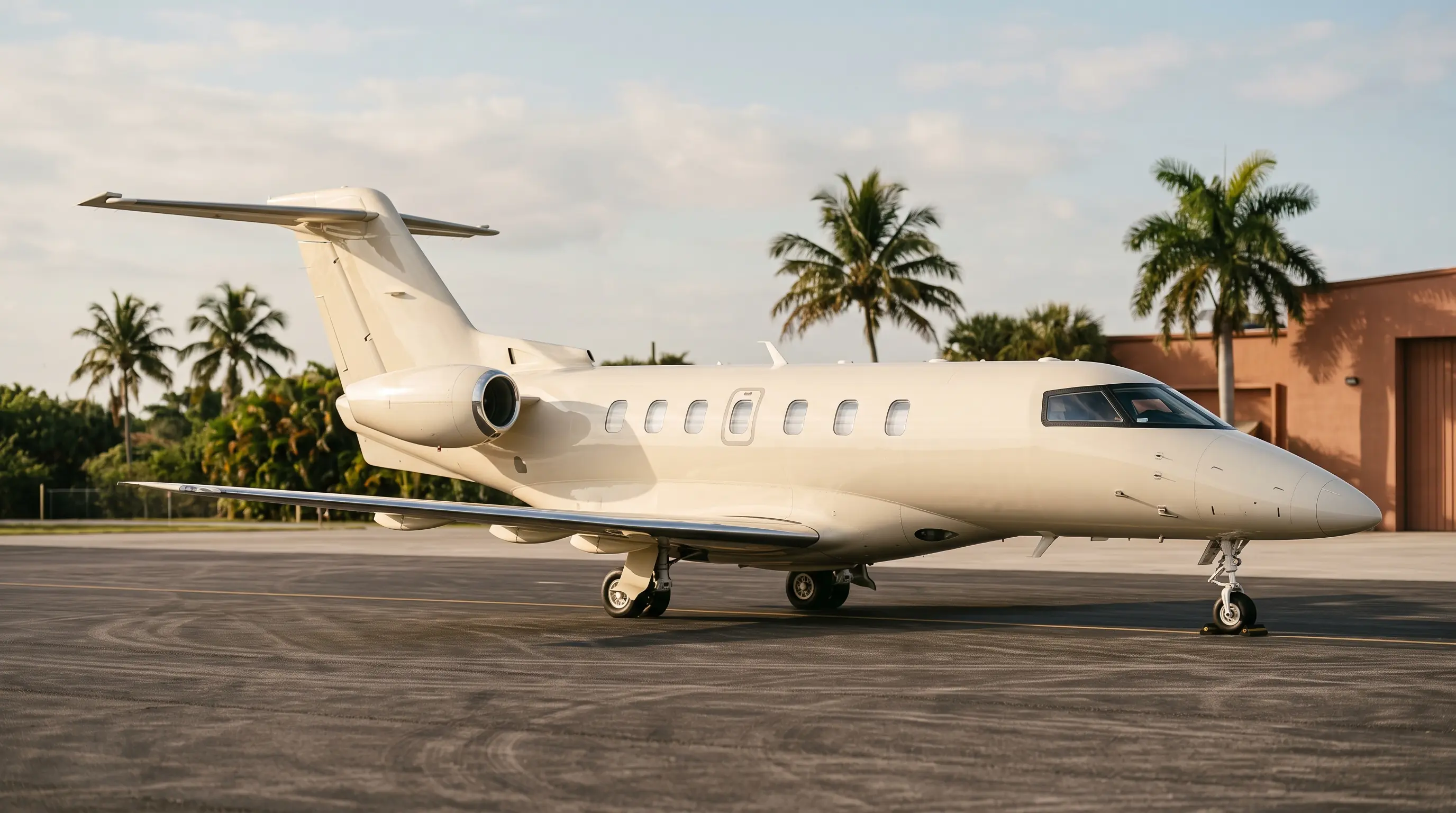
Private charters between Miami and New York typically depart from Miami-Opa Locka Executive Airport (OPF), Fort Lauderdale Executive Airport (FXE), Fort Lauderdale-Hollywood International Airport (FLL), or Miami International Airport (MIA) and arrive at Teterboro Airport (TEB), Westchester County Airport (HPN), Republic Airport (FRG), or Long Island MacArthur Airport (ISP).
Pilatus PC-24 specifications
Manufacturer performance figures — Pilatus.
- 2,000 nm
- Max range
- 440 ktas
- Cruise speed
- 6–8
- Passengers
- 5 ft 1 in
- Cabin height
- 90 cu ft
- Luggage
- 45,000 ft
- Service ceiling
A midsize cabin wearing light-jet economics
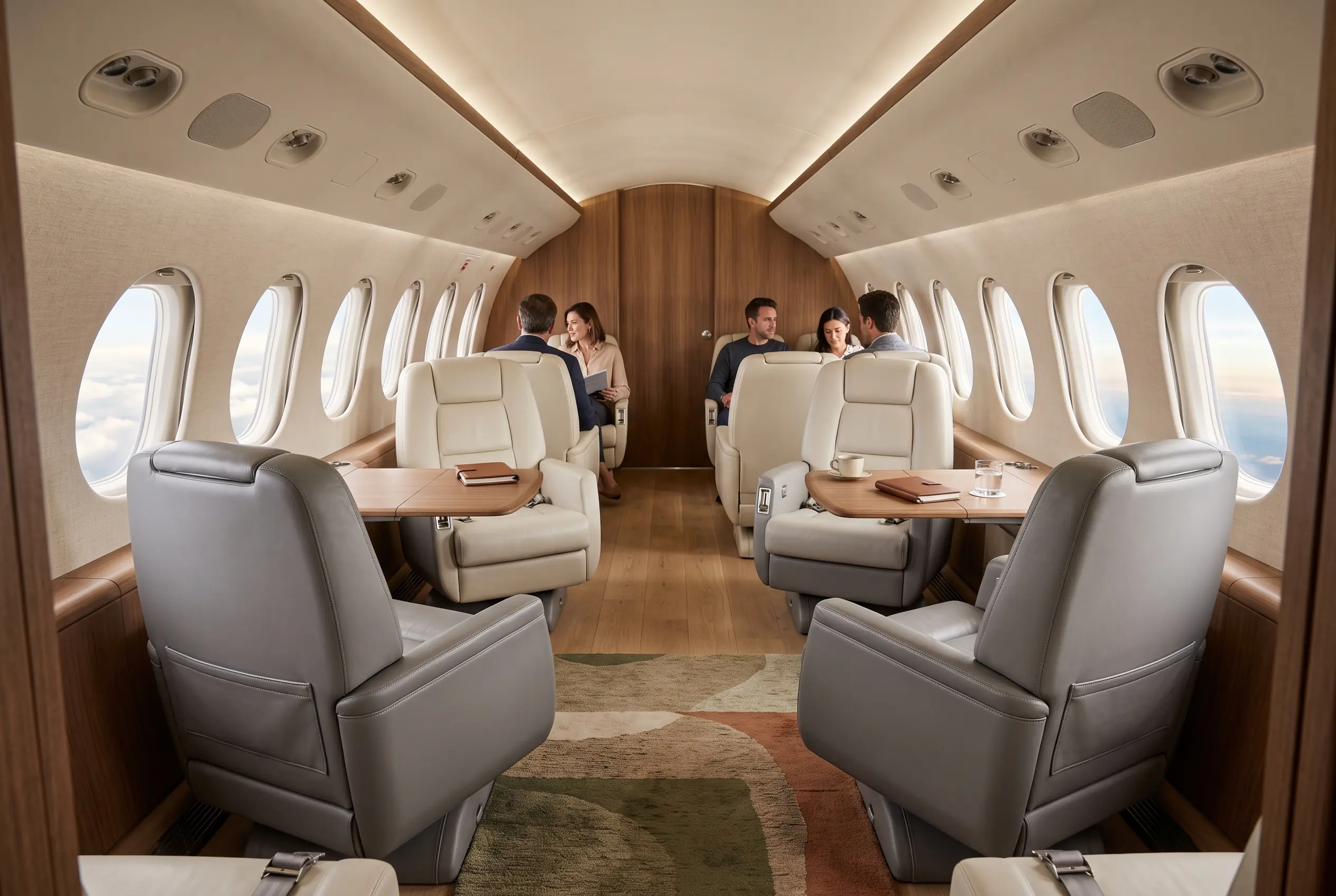
Walk the numbers against the class and the PC-24 reads like a category error. The cabin runs 23 ft long, 5 ft 7 in wide, and 5 ft 1 in tall — wider than anything else here and long enough for six executive seats with room to spare. The flat floor — no dropped-aisle trench — lets you actually use the width, and the seats slide and swivel on tracks. It is one of the few light jets where changing seats mid-flight feels natural rather than gymnastic.
The cargo door is the practical revolution: roughly four feet square, opening onto a 90 cu ft hold that stays accessible in flight. Bicycles boxed for a Hamptons week, an art crate bound for a gallery uptown, eight cases plus skis for a connecting mountain leg, production gear for a shoot — items that force other light jets to shuttle or ship simply board. For families, strollers and car seats stop being a negotiation.
None of this blunts the flying. 2,000 nm of range makes the flight a comfortable nonstop, 440 ktas keeps block times within five minutes of the class leaders, and the 45,000-ft ceiling rides above much of the summer weather. The PC-24 was also built to use runways others refuse — grass and gravel included — which on this route simply means every New York-area executive field, whatever the morning's slot situation, stays in play.
- Widest, tallest cabin in the light class — flat floor throughout
- 90 cu ft hold behind a cargo door roughly four feet square
- About 2 h 25 m nonstop, Fort Lauderdale Executive Airport (FXE) or Opa Locka to Teterboro or Morristown Municipal Airport (MMU)
- One-way estimated $15,000–$23,000 — midsize space without midsize invoices

Who should book it — and who shouldn't
Book the PC-24 when the load is the story: family relocations, sports equipment, photography and film gear, seven or eight travelers who all packed honestly. Its cross-shop upward is the Citation Latitude — a true stand-up midsize for roughly $7,000 more — and within class the Phenom 300E wins on outright pace and fleet depth when the luggage is ordinary. The PC-24's weakness is scarcity: the fleet is smaller than the Citations' and Phenoms', so it rewards planning ahead.
Give us three or four days' notice for the best odds, longer for holidays. As ever, the arrangement is with FAA Part 135 operators under current audits, quotes are itemized, and if the specific cargo matters — dimensions, weight, a crated something — send the numbers with the inquiry so the load plan is confirmed before you commit rather than after.
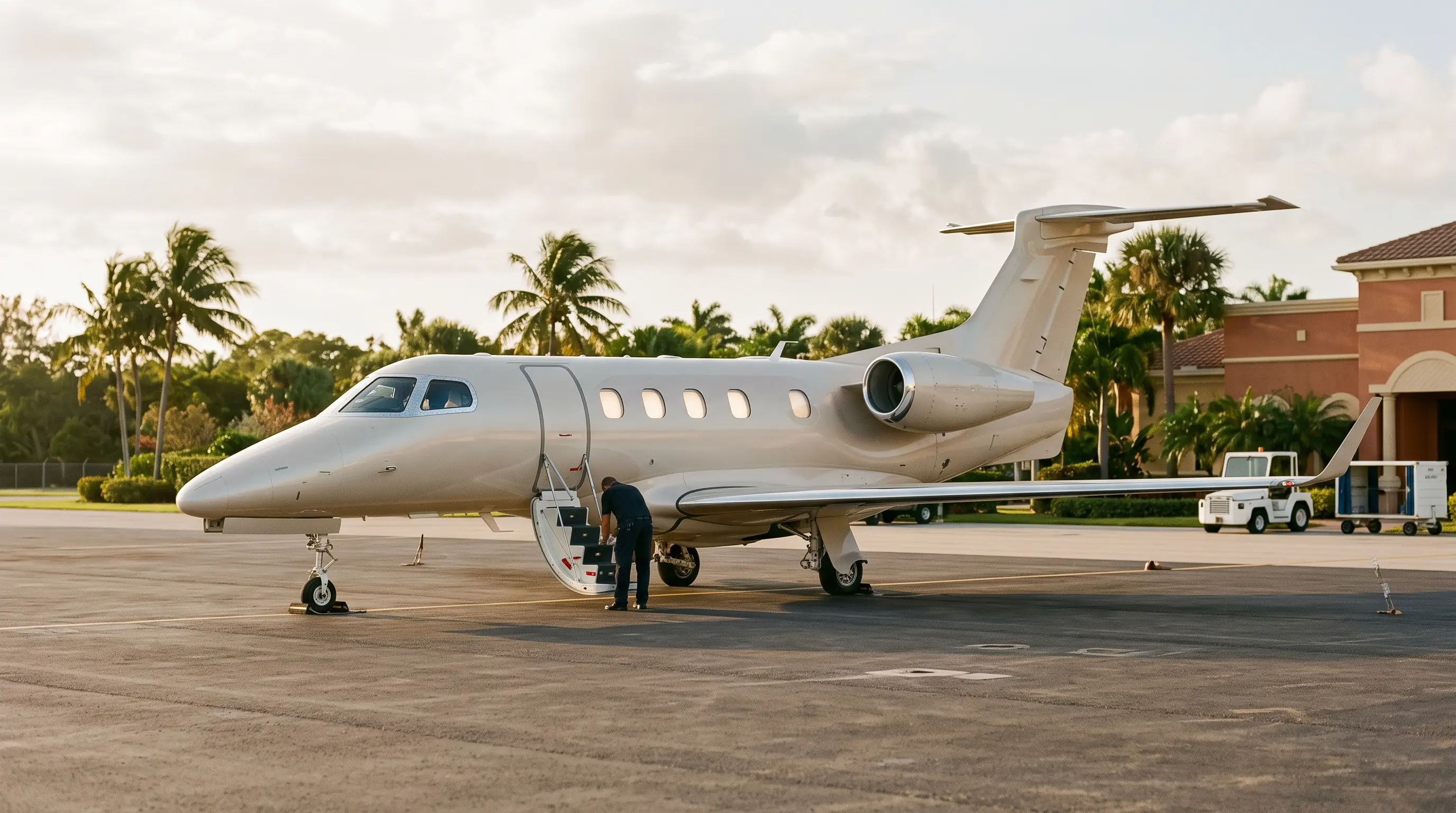
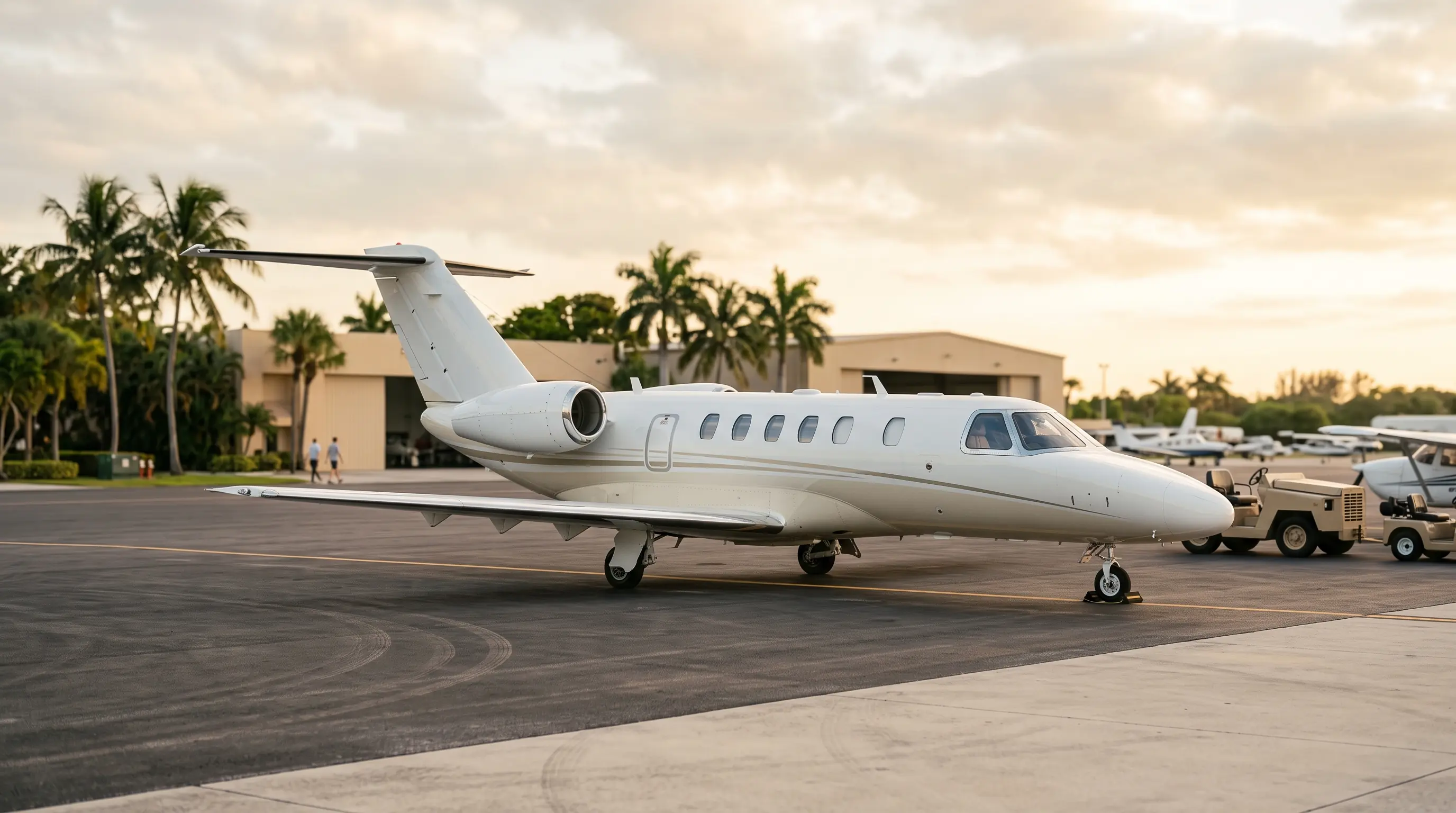
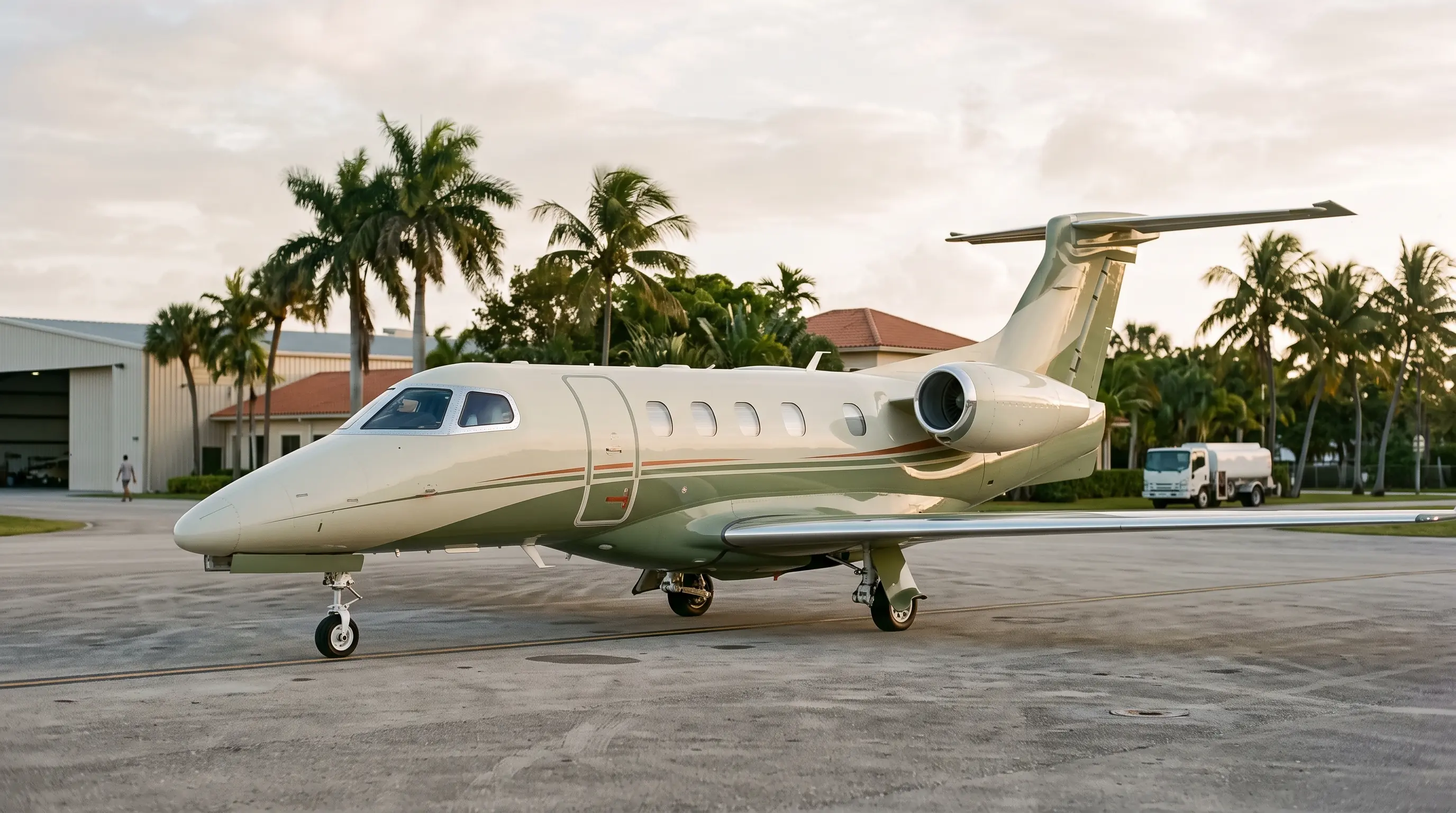
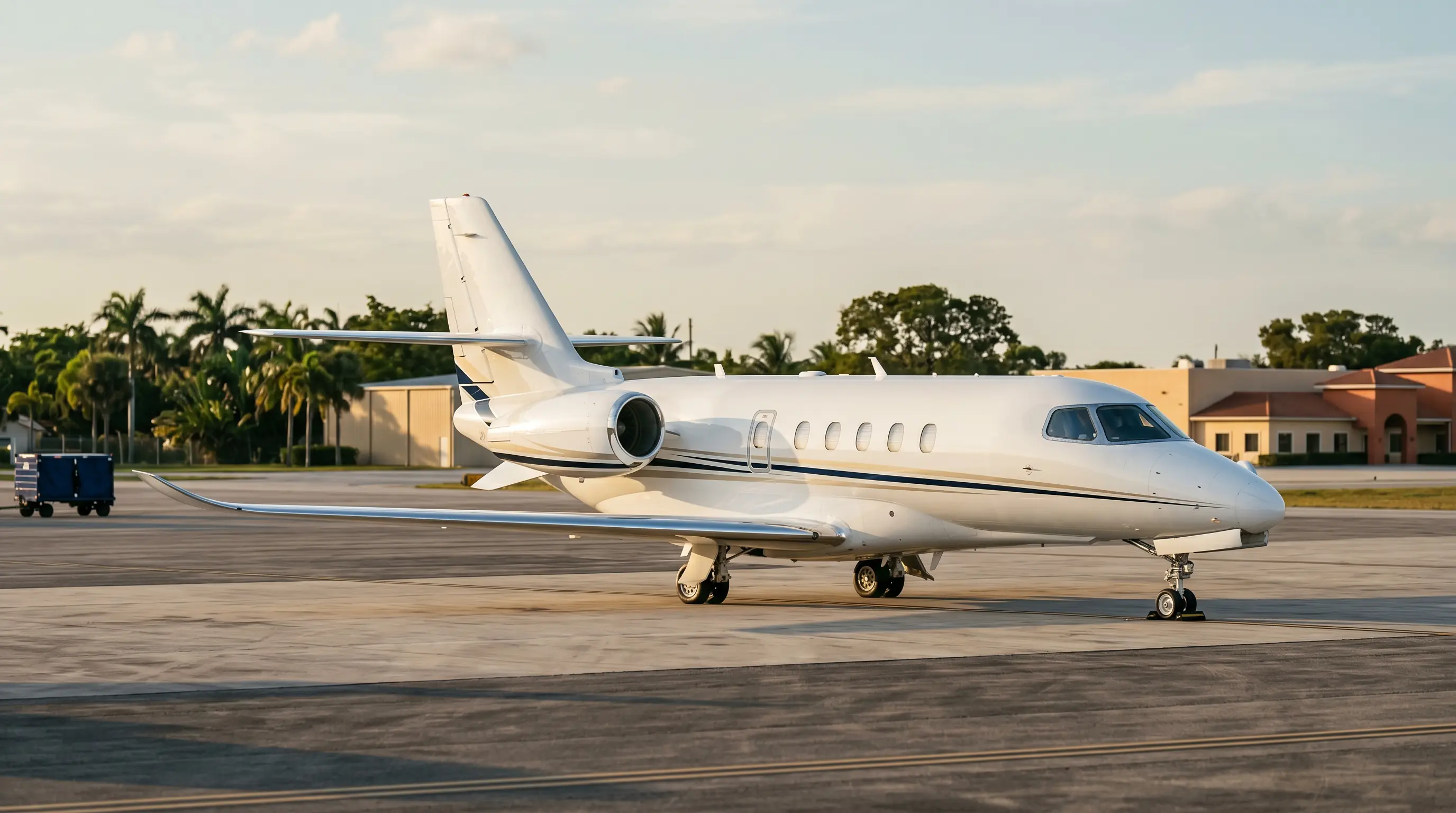
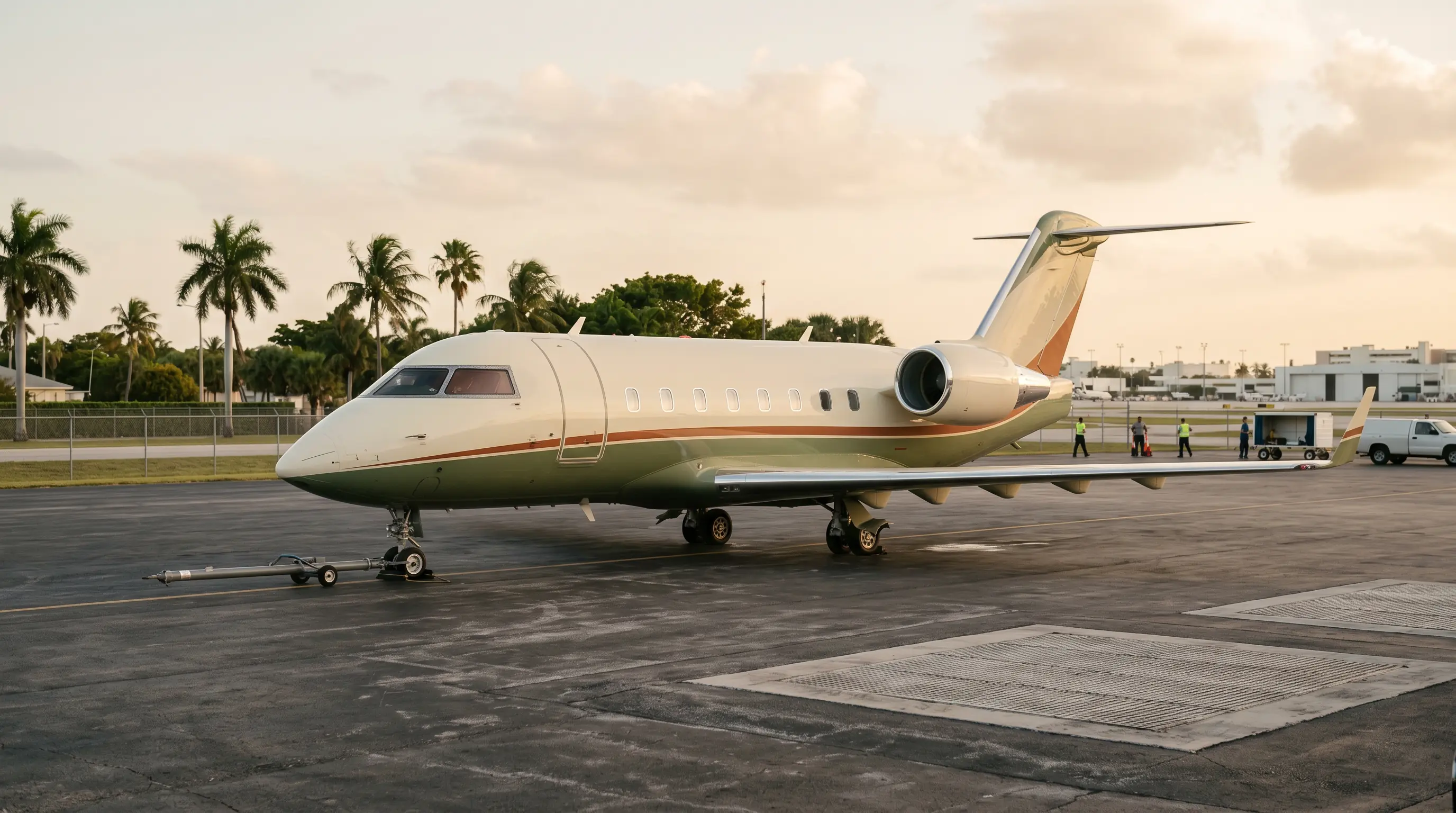
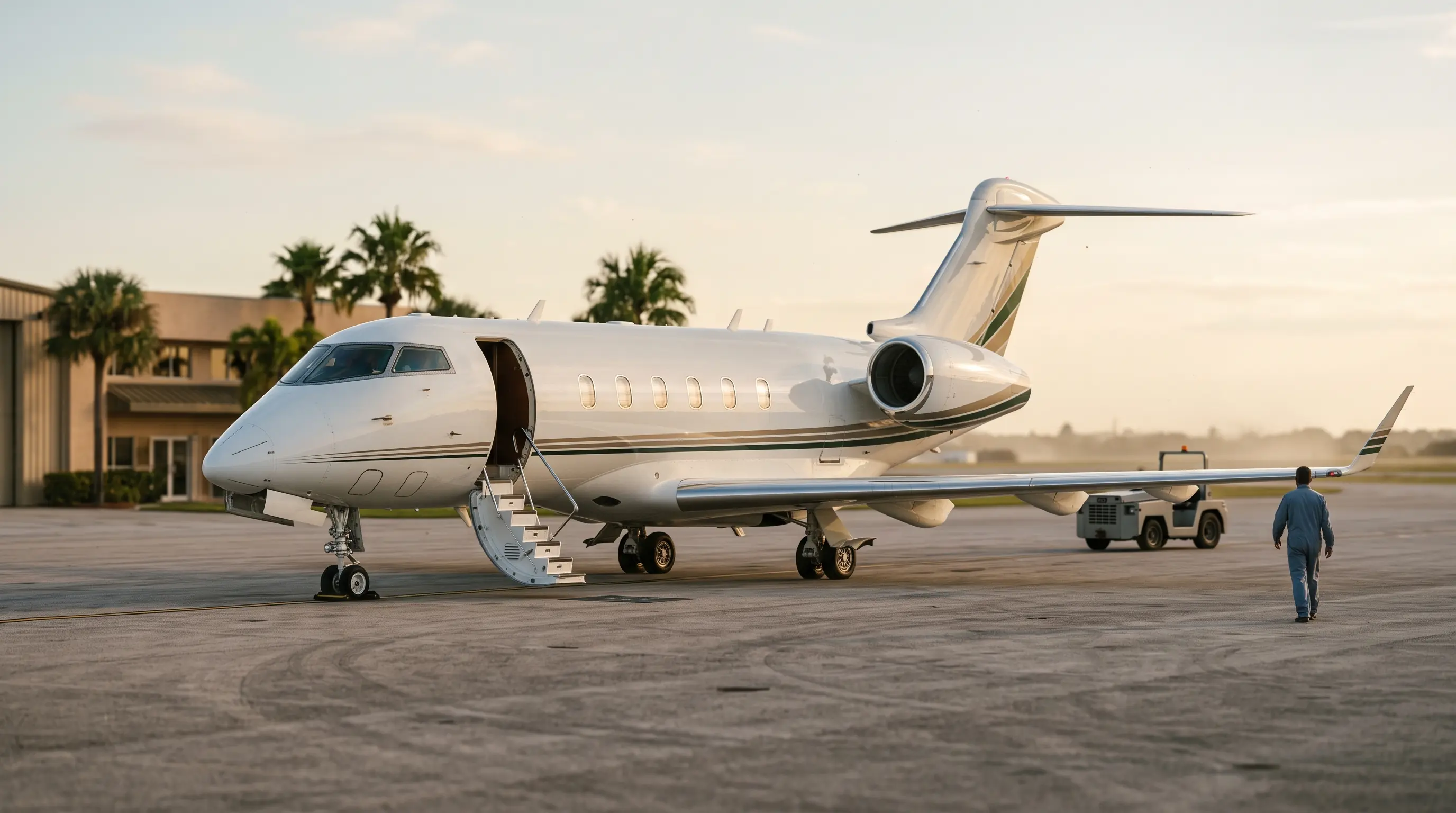
The Pilatus PC-24, inside and out

Charter services for the Miami–New York route
Frequently asked questions
How does the PC-24 compare to a midsize jet for this trip?
Cabin width and floor space genuinely overlap the midsize class — 5 ft 7 in across beats several of them — while height falls a few inches short of true stand-up. Block time matches a midsize within minutes on this leg. The invoice is where they part: the PC-24 starts around $15,000, a Latitude nearer $22,000.
What flight time should we plan Miami to New York?
About 2 hours 25 minutes gate to gate at the PC-24's 440-ktas cruise — five minutes or so behind a Phenom 300E, comfortably ahead of the smaller Citations. Range is never a question here: 2,000 nm means the 1,000-nm leg flies nonstop with generous reserves all year.
What can the cargo door actually swallow?
The opening is about 4 ft square into a 90 cu ft pressurized hold, so think boxed bicycles, a full family's cases plus golf and dive gear, camera and lighting trunks, even modest furniture pieces. If it fits through four feet and weighs sensibly, it likely flies. Send dimensions and we will confirm against the load plan.
How many passengers does the PC-24 carry on charter?
Six executive seats is the common charter fit, expandable to eight; the flat floor and 23-ft cabin keep eight from feeling stacked. Commuter-style layouts up to eleven exist but rarely fly charter between Miami and New York. Six adults plus serious luggage is the sweet spot few rivals match at the price.
Why is the PC-24 harder to find than a Phenom or Citation?
Pilatus builds in smaller volumes and owners hold onto them, so far fewer PC-24s fly open charter than 300-series Embraers or CJs. Here that means booking three or four days out rather than same-day, and being flexible on the departure hour. When the mission fits, the wait is worth it.
Ready to fly Miami to New York?
Send your dates and party size for estimated pricing across suitable aircraft — typically within two hours, with no obligation.
 +1 (786) 828-5664
  +1 (786) 828-5664
